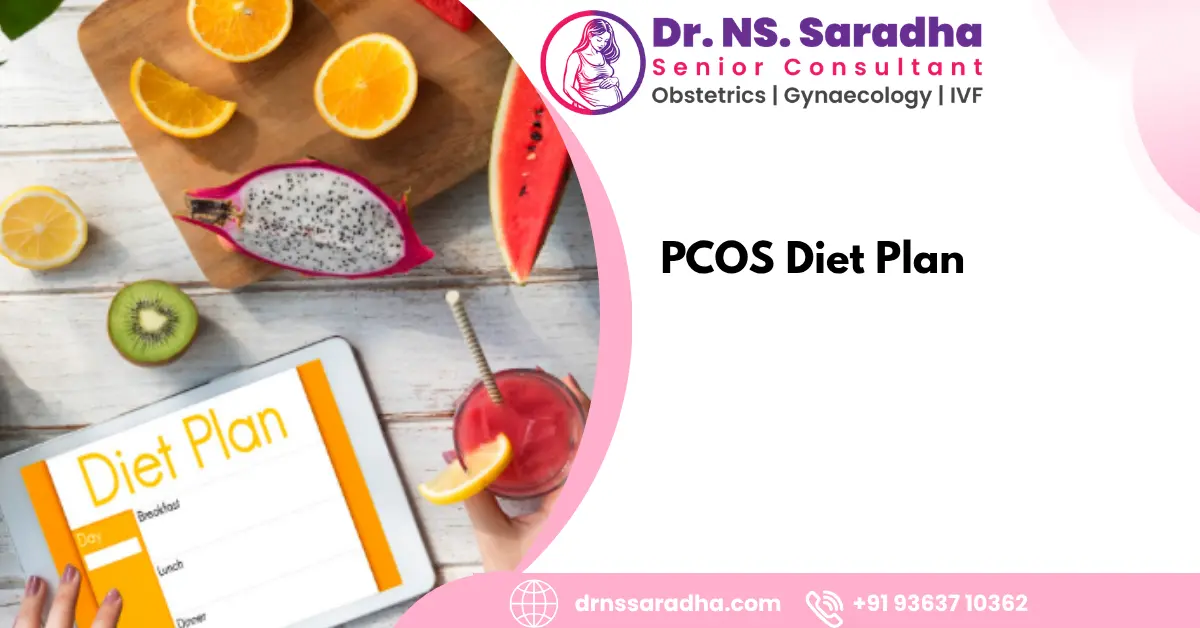
A good PCOS diet plan is built on regular meals with vegetables, fibre-rich carbohydrates, enough protein, and healthy fats. It does not need crash diets or banned foods. Balanced eating can support your overall and metabolic health and help you manage some PCOS symptoms. It does not cure PCOS.
PCOS is different for every woman. Some women need weight management, and some do not. Some have irregular periods, some have acne or hair growth, and some face fertility concerns. So there is no single diet that suits everyone. The chart below is a general example you can adapt, not a personal prescription.
This guide is prepared with the clinical perspective of Dr. N.S. Saradha, a Senior Consultant in Obstetrics, Gynaecology & IVF with over 30 years of experience in women’s healthcare in Chennai.
What Is a PCOS Diet Plan?
PCOS (polycystic ovary syndrome) is a common hormonal condition in women of reproductive age. It can cause irregular periods, excess androgen effects such as acne or unwanted hair growth, and changes in the ovaries. Many women with PCOS also have insulin resistance. This means the body does not respond to insulin as well as it should, which can affect blood sugar and metabolic health.
A PCOS diet plan is simply an eating pattern that supports steady blood sugar, good digestion, and a healthy weight where needed. Food choices such as fibre, protein, and slowly digested carbohydrates may help the body handle sugar better after meals.
Your needs can still differ from another woman’s. Your symptoms, age, activity level, medical history, food habits, and personal preferences all matter. Diet is one part of PCOS care, and it works best alongside medical guidance. To understand the condition better, you can read our guide on the difference between PCOS and PCOD.
Healthy Diet Plan for PCOS: A Daily Indian Food Chart
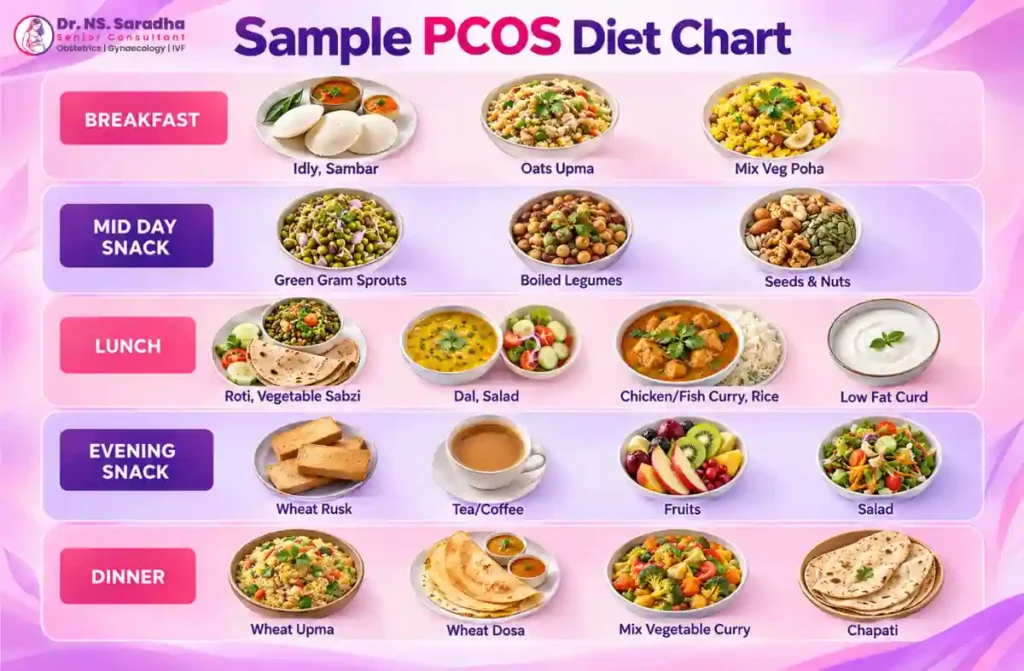
Here is a practical PCOS diet plan in chart form. Use it as an idea bank, not a fixed rule. Portions and meal timing should match your hunger, activity, and doctor’s advice.
A simple way to build any meal is the plate method. Fill about half your plate with vegetables, about a quarter with protein, and about a quarter with whole-grain or millet-based carbohydrate. Add a small portion of healthy fat.
| Meal time | Suggested meal | Indian food examples | Nutritional benefit |
| Early morning | Light, unsweetened start | Warm water or jeera water; soaked almonds or walnuts; unsweetened buttermilk | Hydration and a small healthy-fat boost |
| Breakfast | Protein plus fibre | Idli with sambar and chutney; vegetable dosa with sambar; vegetable oats or vegetable upma. Add boiled egg or paneer bhurji if suitable. Vegetarian: moong dal chilla or pesarattu | Slow-release energy, plant fibre, and protein to keep you full |
| Mid-morning snack | Whole fruit or nuts | Guava, apple, papaya, or pear; a handful of nuts and seeds | Fibre, vitamins, and healthy fats |
| Lunch | Balanced plate | Rice or chapati in a measured portion with sambar or dal, a vegetable poriyal, keerai (leafy greens), and curd. Add fish curry, egg, or chicken if non-vegetarian. Vegetarian: chana, rajma, or tofu curry | Combines protein, fibre, and carbohydrate for steady energy |
| Evening snack | Light and filling | Sundal (chickpea, green gram, or peas); roasted chana; vegetable soup; sprouts salad | Protein and fibre that curb heavy snacking |
| Dinner | Lighter, vegetable-rich | Chapati with dal or vegetable curry; vegetable upma or millet dosa with sambar; grilled fish or paneer with sautéed vegetables | Easy to digest, with protein and vegetables |
Remember: This is a general example. The right portions and foods for you depend on your health, weight, activity, medicines, and medical advice.
Best Foods to Include in a PCOS Diet Plan
Fibre-Rich Foods
Fibre slows digestion and helps you feel full for longer. It also supports gut health. Good Indian choices include vegetables such as beans, carrot, cabbage, and drumstick, along with legumes, millets like ragi and kambu (pearl millet), and whole fruits. Try adding a vegetable or legume to every meal.
Protein-Rich Foods
Protein helps balance meals and keeps hunger in check. Options include dal, chana, rajma, green gram, lentils, tofu, paneer, curd, and milk. Eggs, fish, and lean chicken are good choices if you eat non-vegetarian food. Include a protein source in each main meal and snack where possible.
Healthy Fat Sources
Healthy fats add flavour and help you absorb some vitamins. Choose nuts, seeds (flax, pumpkin, sunflower), and suitable unsaturated oils such as groundnut, sesame, or mustard oil in modest amounts. Fats are calorie-dense, so portion size matters.
Fruits and Vegetables
Eat a mix of seasonal fruits and vegetables across the day, and include leafy greens often. Whole fruit can be part of a PCOS diet plan. Fruit contains natural sugar, but it also brings fibre, water, and nutrients, so it does not need to be avoided. Whole fruit is better than fruit juice, and pairing fruit with nuts or curd may help you feel fuller.
Foods to Limit or Reduce With PCOS
You do not have to give up your favourite foods. Overall eating patterns matter more than any single food. These are worth limiting when eaten often or in large amounts:
- Sugary drinks such as soft drinks, packaged juices, and sweetened tea or coffee
- Excess added sugar in sweets, bakery items, and desserts
- Highly refined snacks like maida-based biscuits, white bread, fried chips, and packaged namkeen
- Deep-fried foods eaten very frequently
Rice, wheat, potato, dairy, and fruit are not forbidden for every woman with PCOS. Tolerance and needs vary, so portion size and food combinations often matter more than complete avoidance. Before cutting out a whole food group, speak to a doctor or qualified dietitian.
South Indian Diet Plan for PCOS
South Indian food can fit a PCOS diet plan well when meals are balanced. No traditional food cures PCOS, but familiar meals are easier to follow for the long term.
- Idli and sambar: Sambar adds dal protein and vegetables. Pair idli with chutney and extra sambar.
- Dosa with sides: Choose vegetable dosa, pesarattu, or millet dosa with sambar or a legume-based side.
- Vegetable upma: Add plenty of beans, carrot, and peas for fibre.
- Sundal: A simple evening snack of chickpeas, green gram, or peas.
- Rice meals: Serve a measured portion of rice with sambar, a vegetable poriyal, keerai, and a protein like dal, egg, or fish.
- Chapati with dal or vegetable curry: A good lighter dinner option.
- Curd and seasonal fruit: Curd works well if it suits you. Choose whole fruits like guava, papaya, or apple.
To build a meal, combine one fibre-rich food, one protein source, plenty of vegetables, and a sensible portion of carbohydrate.
Vegetarian Diet Plan for PCOS
A vegetarian diet can work well for PCOS. The main task is to get enough protein from varied sources. Good options include dal, chana, rajma, green gram, soy foods like tofu, nuts, seeds, and dairy products where suitable.
Some practical combinations:
- Breakfast: Moong dal chilla with mint chutney, or idli with sambar
- Lunch: Dal, vegetable poriyal, keerai, curd, and a small portion of rice or chapati
- Snack: Sundal, roasted chana, or paneer cubes
- Dinner: Rajma or tofu curry with chapati and a vegetable side
Women following very restrictive vegetarian or vegan diets may need individual assessment for nutrients such as vitamin B12, iron, and protein. Please do not start supplements without medical advice.
PCOS Diet Plan for Weight Management
Some women with PCOS may benefit from changes that support weight management, while others may not need to lose weight at all. Body weight alone does not decide how severe PCOS is. The focus should be on sustainable habits rather than crash diets:
- Balanced meals: Include vegetables, protein, fibre, and measured carbohydrates.
- Adequate protein and fibre: These help control hunger between meals.
- Regular physical activity: Walking, yoga, strength exercises, or any activity you enjoy and can keep up.
- Sleep and stress: Poor sleep and ongoing stress can affect appetite and hormones, so they deserve attention too.
There is no universal calorie limit that suits every woman, and no safe way to promise rapid weight loss. A doctor or dietitian can guide you on goals that suit you.
Does a PCOS Diet Plan Help With Irregular Periods?
Healthy eating and lifestyle changes may support overall metabolic health, and this can be part of managing PCOS. But irregular periods can have several causes, including thyroid problems, high prolactin, stress, and sudden weight change. A diet alone cannot be expected to restore periods within a fixed time.
If your periods are irregular, missed, or very heavy for several months, please get a medical assessment rather than relying only on diet. You can learn more about menstrual disorders and how they are evaluated.
PCOS Diet Mistakes to Avoid
If you have made some of these mistakes, please do not feel bad. They are very common, and they are easy to correct.
- Extreme or restrictive diets: They are hard to sustain and may leave you short of nutrients.
- Skipping meals: This can lead to poor nutrition or overeating later in the day.
- Cutting out entire food groups without a clear reason: Rice, dairy, or fruit do not have to be removed for everyone.
- Relying on supplements or herbal remedies without medical advice: Some may not be suitable or may interact with medicines.
- Expecting diet alone to fix every symptom: PCOS care often needs medical follow-up as well.
- Copying someone else’s diet: What worked for a friend or an influencer may not suit your body.
Lifestyle Tips Along With a PCOS Diet Plan
Food works best as part of a bigger routine:
- Move regularly: Aim for activity you enjoy, such as brisk walking, cycling, yoga, or strength training.
- Keep a sleep routine: Go to bed and wake up at similar times where you can.
- Manage stress: Breathing exercises, hobbies, time outdoors, or talking to someone you trust can help.
- Follow up with your doctor: Regular check-ups help track blood sugar, cycles, and other health markers.
- Seek personalised nutrition support when needed: A qualified dietitian can tailor meals to your health and culture.
Lifestyle changes support treatment but do not replace medicines or procedures when they are clinically needed.
When Should You Consult a Doctor About PCOS?
It is a good idea to see a doctor if you have:
- Periods that stay irregular, are very infrequent, or are missing
- Symptoms that trouble you, such as acne, excess hair growth, or hair thinning
- Difficulty conceiving or concerns about fertility
- Questions about blood sugar, weight, or metabolic health
Dr. N.S. Saradha’s practice covers PCOS and hormonal disorders, including irregular periods, weight management and insulin resistance in PCOS, and PCOS-related fertility care. Not every woman needs the same tests or treatment. Your doctor will decide what is right for you after assessing your history and symptoms.
Conclusion
A balanced, sustainable PCOS diet plan is about steady habits, not strict rules. Small changes you can keep up, such as more vegetables, enough protein, fewer sugary drinks, regular movement, and good sleep, add up over time.
If you have persistent irregular periods, troublesome symptoms, or fertility concerns, you are welcome to consult Dr. N.S. Saradha for appropriate gynaecological guidance.