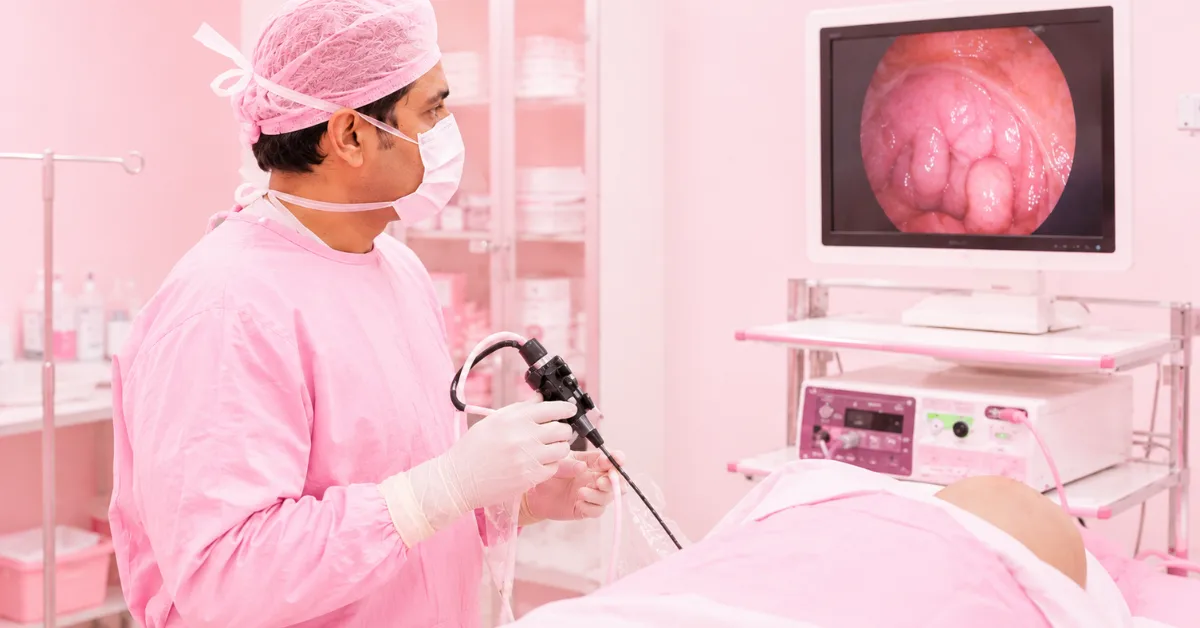
When a woman experiences irregular bleeding, repeated pregnancy loss, or difficulty getting pregnant, the cause is not always visible from the outside. Many uterine conditions stay hidden unless a doctor looks inside the uterus directly. That is exactly what hysteroscopy allows.
Dr. N.S. Saradha, a trusted and experienced gynecologist surgeon in Chennai, uses hysteroscopic procedures to find and treat problems inside the uterus without any large cuts, without long hospital stays, and with much faster recovery compared to open surgery.
Hysteroscopic procedures involve a thin, lighted tube called a hysteroscope that is gently passed through the cervix into the uterus. Through this small instrument, Dr. Saradha can see the inside of the uterus clearly and, when needed, treat the problem during the same visit. It is a precise, safe, and minimally invasive approach that has helped many women in Chennai, Vadapalani, and Saligramam get the answers and relief they needed.
Whether the concern is fibroids, a uterine septum, scar tissue, or heavy periods that just won’t stop hysteroscopic procedures offer a focused solution with fewer risks and a quicker return to normal life.
Before any treatment, the most important step is understanding what is actually happening inside the uterus. Diagnostic hysteroscopy is done exactly for this reason.
Dr. N.S. Saradha uses diagnostic hysteroscopy to examine the inside of the uterus directly and in real time. The procedure is simple. A slim hysteroscope is passed through the cervix no incisions needed. The view is magnified and clear, which means even very small problems can be spotted that might not show up on a scan or ultrasound.
The procedure usually takes less than thirty minutes and can be done as an outpatient procedure in most cases. Recovery is quick, and most women return to their routine within a day or two. When the findings require treatment, Dr. Saradha can often proceed during the same session meaning fewer visits and a faster path forward for the patient.
Fibroids are non cancerous growths that develop in or around the uterus. When they grow inside the uterine cavity known as submucosal fibroids they can cause heavy bleeding, painful periods, difficulty conceiving, or repeated pregnancy loss.
Hysteroscopic myomectomy is a procedure that removes these fibroids from inside the uterus using a hysteroscope, without any cuts on the abdomen. It is one of the most effective hysteroscopic procedures available today for women with submucosal fibroids.
Dr. N.S. Saradha, a skilled gynecologist surgeon in Chennai, performs hysteroscopic myomectomy using a resectoscope a thin instrument passed through the hysteroscope to carefully shave and remove the fibroid tissue. The uterus is preserved completely, which is particularly important for women who still wish to have children.
Not every fibroid can be treated through hysteroscopy the location and size matter. Dr. Saradha evaluates each patient carefully before recommending this approach, making sure it is the right fit for the individual situation.
Heavy menstrual bleeding is a real problem. It affects daily life, causes exhaustion from blood loss, and can make even routine activities difficult to manage during periods. For women who have completed their families and are looking for a lasting solution, endometrial ablation offers significant relief.
Endometrial ablation is a hysteroscopic procedure that destroys the inner lining of the uterus the endometrium to reduce or completely stop menstrual bleeding. It is not a removal of the uterus. It is a targeted treatment of the uterine lining, done through the hysteroscope, without any external incisions.
Dr. N.S. Saradha recommends this procedure for women who:
The procedure is done under anaesthesia and typically takes about fifteen to thirty minutes. Most women experience significantly lighter periods after the procedure, and in some cases periods stop entirely. Recovery is usually quick, with mild cramping for a day or two being the most common experience afterwards.
It is important to understand that endometrial ablation is not suitable for women who are planning a future pregnancy. Dr. Saradha takes time during the consultation to explain who this procedure is right for, what to expect during recovery, and what results are realistic for each patient.
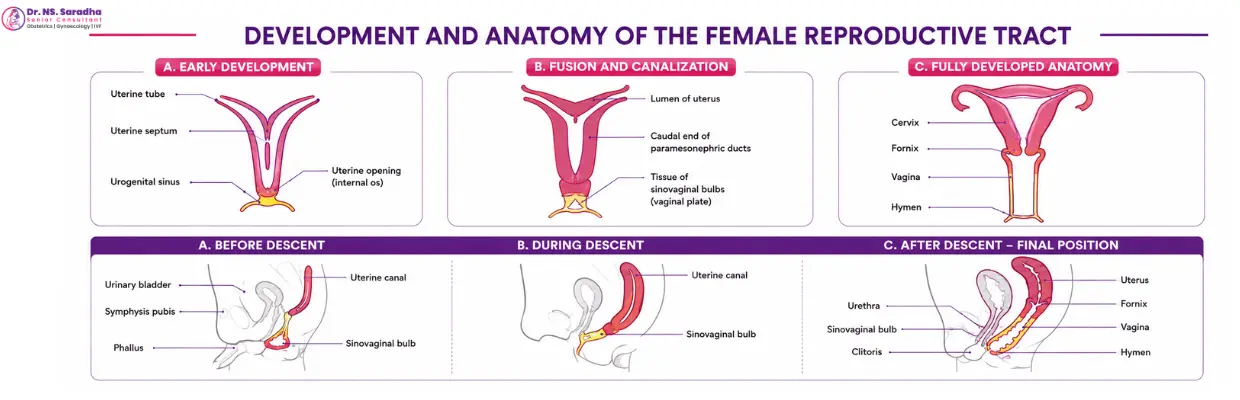
Some women are born with a uterine septum a band of tissue that divides the inside of the uterus into two sections. Many women do not know this until they experience repeated miscarriages or face difficulty getting pregnant. A septum does not always cause symptoms, but when it does, it can be a significant barrier to a healthy pregnancy.
A uterine septum can interfere with the implantation of an embryo or restrict the space available for a growing baby, which increases the risk of miscarriage or preterm birth. The good news is that it can be corrected through a procedure called hysteroscopic septoplasty, and the results are often very encouraging for women trying to conceive.
Hysteroscopic septoplasty is one of the more specialised hysteroscopic procedures performed by Dr. N.S. Saradha. During the procedure, the septum is cut and removed using fine instruments passed through the hysteroscope. No incisions are made on the abdomen. The uterine cavity is restored to its normal, undivided shape.
Many women who have had recurrent miscarriages and felt helpless have found real hope after septoplasty. Dr. Saradha approaches these cases with both clinical precision and a deep understanding of what the patient is going through emotionally.
Asherman's syndrome is a condition where scar tissue also called adhesions or synechiae forms inside the uterine cavity. This scar tissue can partially or completely block the cavity, causing irregular or absent periods, pelvic pain, and difficulty getting pregnant or carrying a pregnancy to term.
Asherman's syndrome often develops after a uterine procedure such as a D&C (dilation and curettage), particularly following a miscarriage or delivery. It can also occur after uterine surgery or a severe infection. Many women are unaware they have it until they notice changes in their menstrual cycle or face challenges with fertility.
The treatment for Asherman's syndrome is Asherman's adhesiolysis a procedure in which the scar tissue is carefully cut and removed from inside the uterus using a hysteroscope. Dr. N.S. Saradha, recognised as a dependable gynecologist surgeon in Vadapalani and gynecologist surgeon in Saligramam, has the experience and technical skill to handle even complex adhesion cases.
Recovery is generally smooth. Follow-up hysteroscopy may be recommended to confirm healing and check that the cavity has remained clear. For women with severe Asherman's syndrome, more than one session may be needed.
The outcome of adhesiolysis depends on the extent and density of the scar tissue. Dr. Saradha discusses realistic expectations with each patient before the procedure, so they know what to expect at every stage.
Choosing the right doctor for a uterine procedure matters enormously. These are not routine check ups they are procedures that directly affect a woman's health, her ability to carry a pregnancy, and her quality of life.
Dr. N.S. Saradha is a gynecologist surgeon in Chennai with focused experience in performing the full range of hysteroscopic procedures. Patients from across the city, including from Vadapalani and Saligramam, seek her care for one simple reason she takes the time to understand each patient's history, explain the options clearly, and recommend only what is truly needed.
Her approach combines clinical precision with compassionate care. She believes that a woman should never leave a consultation more confused or worried than when she walked in. Every procedure is planned carefully, performed with attention to detail, and followed up properly.
For women in Vadapalani, Saligramam, and the wider Chennai area who are looking for a trusted gynecologist surgeon in Chennai experienced in hysteroscopic procedures, Dr. N.S. Saradha is a name worth knowing.
Uterine problems, whether they involve fibroids, a septum, scar tissue, heavy bleeding, or unexplained fertility challenges, are not something a woman has to simply live with. With the advances in hysteroscopic procedures, many of these conditions can now be diagnosed and treated in a minimally invasive way with less pain, shorter recovery, and excellent outcomes.
Dr. N.S. Saradha offers the full range of hysteroscopic procedures from diagnostic hysteroscopy to complex adhesiolysis with the skill, experience, and patient-centred care that women in Chennai, Vadapalani, and Saligramam deserve.
If you have been dealing with abnormal periods, repeated pregnancy loss, uterine fibroids, or any concern about the inside of your uterus, a consultation with Dr. Saradha is a good place to start. Clear answers lead to the right treatment and the right treatment changes lives.
Hysteroscopy involves passing a thin telescope (hysteroscope) through the cervix into the uterine cavity, typically with fluid distension, to visualise the endometrium. It can be diagnostic (to investigate abnormal bleeding, infertility, or postmenopausal bleeding) or operative (to treat polyps, fibroids, adhesions, or septa).
Operative hysteroscopy can remove endometrial polyps, submucosal fibroids (myomectomy), uterine septa, and intrauterine adhesions (Asherman’s). It is also used for endometrial ablation (treating heavy periods), removal of retained products of conception or embedded IUDs, and targeted endometrial biopsy.
Diagnostic hysteroscopy is commonly performed in an outpatient or office setting with local anaesthetic or no anaesthetic, using a narrow (2 to 3 mm) scope. Operative hysteroscopy (fibroid resection, ablation) usually requires general or regional anaesthesia due to longer operating time and wider instruments. Many minor procedures are now done awake in a “see and treat” model.
Endometrial ablation destroys the uterine lining to reduce or stop menstrual bleeding. It is suitable for women with heavy periods who do not wish future pregnancy and in whom medical treatment has failed. Methods include bipolar radiofrequency, thermal balloon, and microwave ablation. It is not a contraceptive and should be combined with reliable contraception.
Risks include uterine perforation (1 in 200 to 500), cervical trauma, infection, fluid overload from distension media (especially with monopolar systems), and incomplete treatment. For ablation, rare late complications include haematometra (trapped blood) and, very rarely, endometrial cancer being masked. Fertility is impaired after ablation.
Take the first step toward better women’s health with expert, compassionate care at Dr. N.S. Saradha Women’s Health Centre. Get accurate diagnosis, advanced treatments, and personalized care designed to support safe recovery and long-term wellness at every stage of life.