An ectopic pregnancy cannot continue to term, so it needs medical care. What that care looks like differs from one woman to another. Some are monitored, some are given medicine, and some need an operation. This guide follows the full treatment journey: how the diagnosis is made, how a doctor chooses between options, what each option involves, and what recovery and future pregnancy can look like. It is general information and cannot replace an examination. If you think you may have an ectopic pregnancy, please see a doctor promptly.
What is ectopic pregnancy treatment?
Ectopic pregnancy treatment depends on the patient’s condition and test results. A very small, stable pregnancy with falling β-hCG levels may only need close monitoring. Some patients are suitable for methotrexate, a medicine that stops the pregnancy from growing. Surgery, usually laparoscopy, is advised when there is significant pain, bleeding, a larger pregnancy or concern about a ruptured tube. The doctor decides after examination, ultrasound and blood tests.
What is an Ectopic Pregnancy?
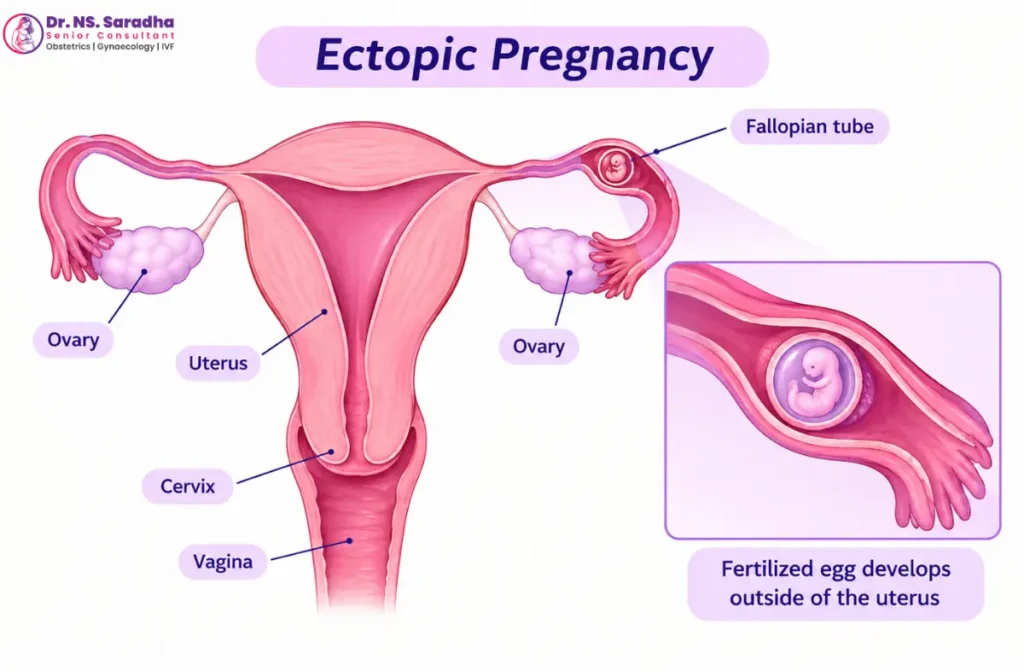
In a normal pregnancy, the fertilised egg travels through the fallopian tube and settles in the lining of the uterus. In an ectopic pregnancy, it settles somewhere else. Most often this is inside the fallopian tube, which is why it is also called a tubal pregnancy. Less often it happens in the ovary, the cervix or a previous caesarean scar.
These places cannot support a growing pregnancy. A fallopian tube is narrow and its wall is thin. As the pregnancy grows, the tube can stretch and may eventually tear, causing internal bleeding. This is why an ectopic pregnancy needs evaluation even when you feel fairly well. It is also why the pregnancy cannot be moved to the uterus or saved.
What Are the Signs and Symptoms of an Ectopic Pregnancy?
Symptoms usually appear a few weeks after a missed period. Common ones include:
- Pain on one side of the lower abdomen or pelvis
- Vaginal bleeding, often different from a normal period (lighter, darker or irregular)
- A missed period with a positive pregnancy test
- Pain at the tip of the shoulder
- Dizziness, weakness or fainting
These symptoms do not confirm an ectopic pregnancy. Many other conditions cause similar complaints. Some women have very mild symptoms, or none, in the early stage. A scan and blood tests are what give the answer.
How Is an Ectopic Pregnancy Diagnosed?
Doctors build the picture from several pieces:
- History and examination: Your symptoms, last period, previous pregnancies, past surgery or infection, and a check of pulse, blood pressure and abdomen.
- Pregnancy test: Confirms that you are pregnant, but not where the pregnancy is.
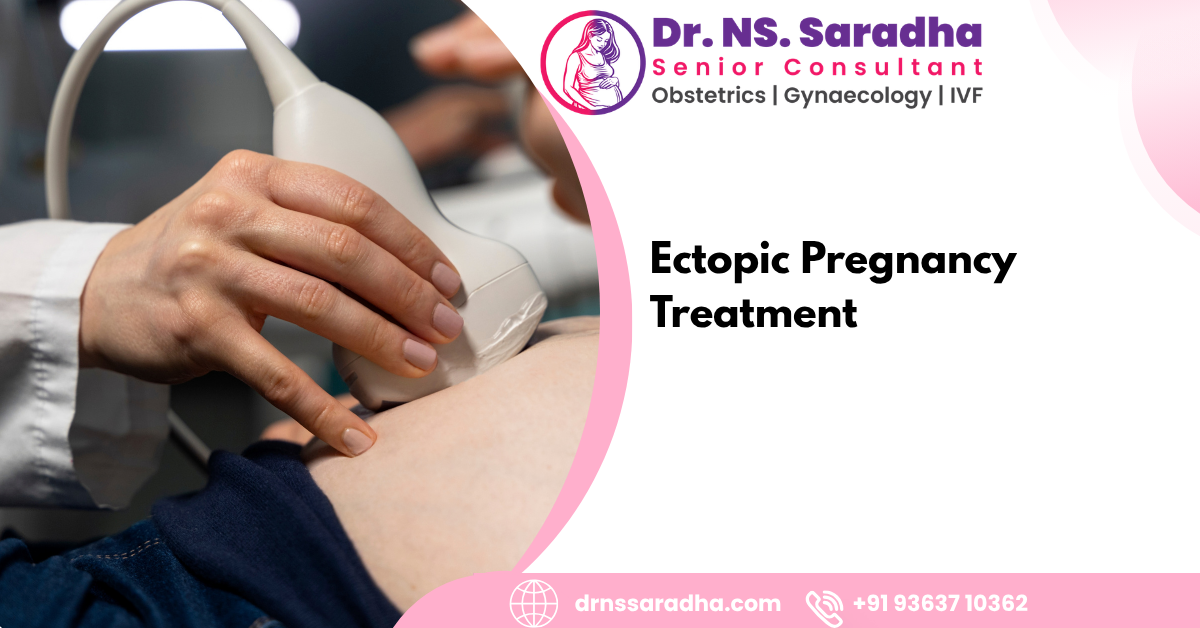
- Transvaginal ultrasound: The main tool for locating the pregnancy. In a normal early pregnancy, the sac is seen inside the uterus.
- β-hCG blood test: Measures the pregnancy hormone. In a normal early pregnancy it usually rises steadily. A slow rise, a plateau or a fall can raise concern.
One test is often not enough. Very early in pregnancy the scan may show nothing clearly, and the doctor may call this a “pregnancy of unknown location”. The β-hCG test is then usually repeated after about 48 hours, and the scan may be repeated too. This waiting is a structured part of safe diagnosis, not a delay. Your blood group is also checked, because it can matter for treatment planning.
How Is Ectopic Pregnancy Treatment Decided?
No single number or finding decides the treatment. The doctor weighs the whole picture:
| Factor | Why it matters |
|---|---|
| Symptoms | Show how the pregnancy is affecting you right now |
| Ultrasound findings | Show where the pregnancy is and how large it is |
| β-hCG level and trend | Helps judge whether the pregnancy is growing, stable or falling |
| Signs of internal bleeding | Fluid on the scan, low blood pressure or fast pulse may mean surgery is needed urgently |
| Overall health | Liver, kidney and blood counts affect whether medicine is safe |
| Medical history | Past tubal surgery, infection or earlier ectopic pregnancy can change the plan |
| Ability to attend follow-up | Monitoring and medicine need reliable return visits and blood tests |
| Future fertility wishes | Considered when the surgeon decides how to operate |
The doctor will talk through the reasons for the recommendation. Treatment is a shared discussion, and the plan can change if your condition changes.
What Are the Treatment Options for Ectopic Pregnancy?
Expectant Management
This means watching carefully without giving medicine or operating. It suits only a small group: women who are stable, have no or very mild symptoms, and have low β-hCG levels that are already falling. In such cases the body sometimes absorbs the pregnancy on its own.
It is not “wait and see” in the casual sense. It needs repeated blood tests, clear instructions about warning signs, and a firm commitment to attend every review. If levels stop falling, rise, or symptoms start, the plan moves to medicine or surgery. Most ectopic pregnancies cannot be safely observed.
Medical Treatment With Methotrexate
Methotrexate is a medicine that stops the pregnancy cells from growing. The body then gradually absorbs the pregnancy. It is given as an injection under medical supervision. It is not a medicine to buy or take on your own, and the doctor decides the dose based on your individual assessment.
It may be considered when the diagnosis is clear, the patient is stable, the pregnancy is small and β-hCG is within a suitable range. It is not suitable for everyone. Liver or kidney problems, certain blood conditions, breastfeeding, and signs of rupture can all rule it out.
After the injection, blood tests are repeated to check that β-hCG is falling. This follow-up is as important as the injection itself. Methotrexate does not work for every patient. Some need a second dose, and some end up needing surgery. A tube can still rupture after treatment, so the warning signs need to be understood. Effective contraception is advised for at least three months afterwards, because the medicine can harm a developing baby.
Surgical Treatment
Surgery is advised when medicine is not suitable or has not worked, when the pregnancy is larger, when there is significant pain or bleeding, or when a tube may have ruptured. If a patient is unwell or bleeding heavily, surgery becomes an emergency. In that situation, an open operation may sometimes be safer than keyhole surgery, and the surgeon will choose based on the patient’s condition.
Where the patient is stable, the operation is usually done by laparoscopy. The surgeon looks at both tubes and the surrounding structures, then removes the pregnancy. Depending on what is found, this means either:
- Salpingectomy: removing the affected tube, or
- Salpingotomy: opening the tube, removing the pregnancy and leaving the tube in place.
Removing the tube is often the safer choice when it is badly damaged or bleeding, or when the other tube looks healthy. Preserving the tube may be considered when the other tube is damaged and future fertility is a concern, but it carries a small chance that some pregnancy tissue remains. The decision is made on what the surgeon sees.
How Does Laparoscopic Surgery Help in Ectopic Pregnancy?
Laparoscopy is keyhole surgery. A few small cuts are made in the abdomen. A thin camera shows the pelvis on a screen, and fine instruments pass through the other openings. The abdomen is gently filled with gas to create working space, and the operation is done under general anaesthesia.
For a stable patient, it can offer a clear view of the tubes, the ability to remove the pregnancy and control bleeding, smaller wounds than open surgery, and often a shorter hospital stay. Whether it is appropriate depends on the patient’s stability, the amount of bleeding and the surgeon’s findings. If conditions inside are difficult, the surgeon may need to change to open surgery. This is a safety decision, not a failure of the plan.
Recovery after laparoscopy is usually quicker than after open surgery, but it still takes time. Some vaginal bleeding, tiredness and shoulder discomfort from the gas are common in the first days. Your surgeon will give you specific instructions.
What Happens After Ectopic Pregnancy Treatment?
Treatment does not end when the injection is given or the operation is over. After medicine, β-hCG is tested at set intervals until it is very low or undetectable. After surgery, a follow-up visit checks healing and reviews what was found during the operation. If the tube was preserved, β-hCG is also checked to be sure no pregnancy tissue remains.
Physical recovery is only part of it. Many women feel grief, anxiety or guilt, even when the pregnancy was early or unplanned. These feelings are normal, and talking to your doctor, partner or a counsellor can help.
Follow the instructions you are given on activity, medicines, contraception and when to return. Contact the doctor early if you notice any of the following:
- Severe or worsening abdominal pain
- Heavy bleeding
- Fainting or feeling very weak
- Fever, or a wound that becomes red, swollen or leaks
How Long Does Recovery Take After Ectopic Pregnancy Treatment?
There is no single recovery time. It depends on the treatment you had, your general health, whether there was significant bleeding, and whether any complication occurred.
As a general guide only, many women who have laparoscopy feel well enough to return to light daily activities within days to a couple of weeks, though tiredness can last longer. After methotrexate there is no wound to heal, but follow-up blood tests can continue for several weeks until β-hCG falls to a very low level, and some activities may be restricted in that time. After open surgery or an emergency, recovery generally takes longer. Your doctor will give guidance for your situation, including when to return to work and exercise.
Can You Get Pregnant After an Ectopic Pregnancy?
Many women do go on to have healthy pregnancies after an ectopic pregnancy, even if one tube was removed. How easily this happens depends on age, the health of the remaining tube, earlier pelvic infection or surgery, and other fertility factors. Some women conceive naturally, some need help, and for some it is difficult. No doctor can promise a particular result.
Many doctors suggest waiting at least three months before trying again, and longer in some cases, so the body can recover and any medicine can clear. A pre-pregnancy visit is useful. It lets the doctor review your history and plan early monitoring for the next pregnancy. If you become pregnant again, contact your doctor early so an early scan can confirm the pregnancy is in the right place. If conception does not happen after a reasonable time, a fertility assessment may be advised.
Can Ectopic Pregnancy Happen Again?
It can. Having had one ectopic pregnancy raises the chance of another. Commonly quoted estimates after one tubal ectopic pregnancy are in the region of about 1 in 10, though figures vary between studies and depend on tube health and the treatment used. This also means most women do not have a repeat ectopic pregnancy.
Risk is higher with previous tubal damage, earlier pelvic infection, previous tubal surgery, or more than one earlier ectopic pregnancy. Early scanning in every future pregnancy is the main safety step.
When Should You Seek Urgent Medical Care?
Go to a hospital emergency department without waiting for an appointment if you are pregnant, or think you might be, and you have any of these:
- Sudden or severe pain in the abdomen or pelvis
- Pain in the tip of the shoulder
- Heavy vaginal bleeding
- Fainting, collapsing or severe dizziness
- Pale, cold or clammy skin, or a very fast heartbeat
These can be signs of internal bleeding. A ruptured tube needs fast assessment because blood loss can build up inside the abdomen without much visible bleeding. Getting seen quickly gives the team the most options.
Ectopic Pregnancy Treatment in Chennai
Women looking for ectopic pregnancy treatment in Chennai can consult a qualified obstetrician and gynecologist for assessment and treatment planning. Dr. N.S. Saradha consults at SIMS Hospitals, Vadapalani and Agna Clinic, Saligramam. Her practice covers obstetrics, gynecology, fertility care, high-risk pregnancy and minimally invasive surgery, all relevant to evaluating early pregnancy problems, planning treatment and advising on future pregnancy.
If you have severe symptoms, go to the nearest emergency department first. For milder concerns, a missed period with spotting, or follow-up planning, you can book a consultation through the contact page.
Conclusion
An ectopic pregnancy needs prompt, individual assessment, and the best treatment is the one that fits your findings and health: monitoring, methotrexate or surgery. Careful follow-up matters as much as the treatment itself, and recovery includes your emotional health as well as your body. Future pregnancy is possible for many women, with early planning and early scans. If you are worried about symptoms or want guidance after treatment, book a consultation with a qualified gynecologist, and use emergency care for severe symptoms.