When it comes to women’s health, getting the right treatment with the least disruption to daily life matters a great deal. That is where laparoscopic procedures make a real difference.
Dr. N.S. Saradha is a trusted name for laparoscopic procedures in Chennai, helping women receive effective surgical care through small incisions, shorter hospital stays, and quicker recovery. Whether it is a fibroid, ovarian cyst, endometriosis, or a condition affecting the fallopian tubes, Dr. Saradha brings years of hands on surgical experience to each case.
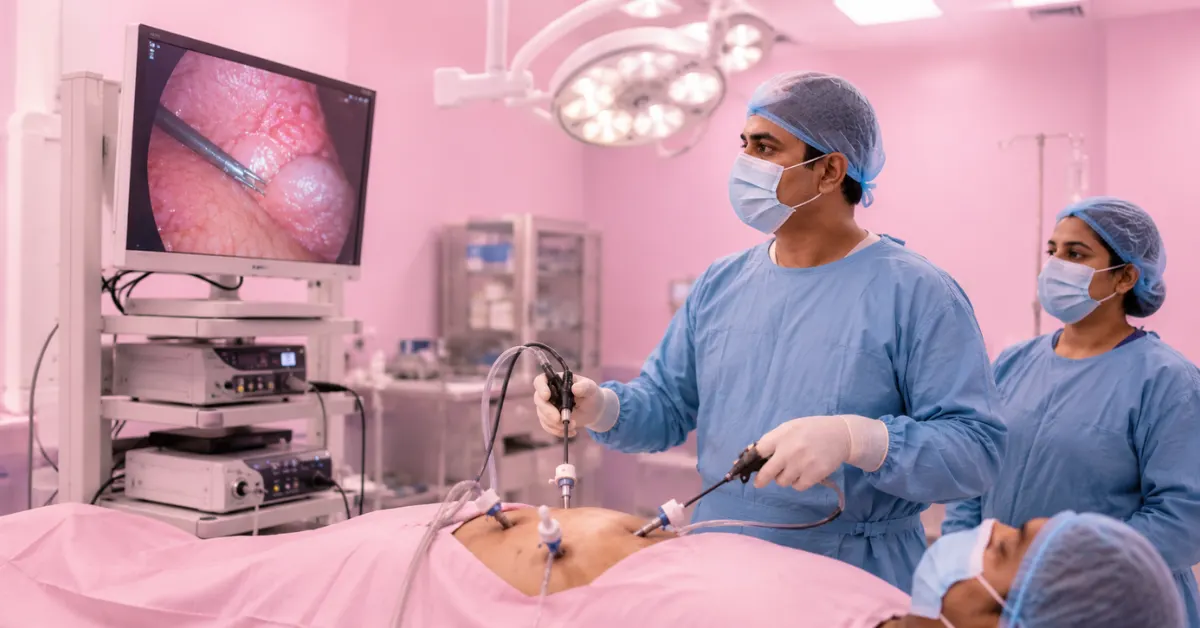
Laparoscopic procedures are a form of minimally invasive surgery. Instead of a large open cut, the surgeon works through two or three small openings using a thin camera and fine instruments. This approach causes less tissue damage, reduces post-operative pain, and gets patients back on their feet sooner.
If you are looking for reliable laparoscopic procedures in Chennai, this page will walk you through everything Dr. N.S. Saradha offers what each procedure is, why it may be needed, and what to expect.
A Total Laparoscopic Hysterectomy, commonly called TLH, is the complete removal of the uterus using a laparoscopic approach. This means the surgery is done through small keyhole incisions in the abdomen, without any large cut.
Dr. N.S. Saradha recommends TLH for women who have conditions such as:
The surgery is performed under general anaesthesia. Dr. Saradha makes two to three small cuts, inserts a camera (laparoscope) and fine surgical tools, and carefully removes the uterus. The entire procedure is guided by a live video feed on a monitor, giving clear visibility throughout.
Since it is a laparoscopic procedure, the benefits are significant. Women typically spend only one to two nights in the hospital and are back to light activity within two to three weeks much faster compared to open surgery, which can require a six week recovery.
TLH preserves the ovaries in most cases, so natural hormone production continues unless the ovaries are specifically removed for medical reasons. Dr. Saradha discusses these options clearly with each patient before surgery.
Fibroids are non cancerous growths in or on the uterus. They are extremely common and affect many women during their reproductive years. While not all fibroids need surgery, some cause heavy periods, pelvic pressure, or problems with fertility.
Laparoscopic myomectomy is the surgical removal of these fibroids while keeping the uterus intact. It is the right choice for women who want to preserve their uterus, especially those who are planning a pregnancy.
Unlike a hysterectomy, myomectomy removes only the fibroids and leaves the uterus behind. Dr. N.S. Saradha performs this as a laparoscopic procedure, which means:
It depends on the size, number, and location of fibroids. Dr. Saradha evaluates each patient individually through ultrasound or MRI imaging and recommends the most suitable approach. For women with multiple or very deeply embedded fibroids, she will discuss the options honestly and help make the right decision together.
After a laparoscopic myomectomy, many women see significant improvement in symptoms. For those trying to conceive, fertility outcomes are also often improved once the fibroids are removed.
An ovarian cyst is a fluid-filled sac that forms on or inside an ovary. Most cysts are harmless and go away on their own. But when a cyst is large, persistent, or causing discomfort, surgical removal becomes necessary.
Laparoscopic ovarian cystectomy is the removal of the cyst while keeping the healthy ovarian tissue intact. Dr. N.S. Saradha is experienced in performing this surgery with great precision, protecting as much of the ovary as possible.
Through two to three small incisions, Dr. Saradha carefully removes the cyst without rupturing it. This is important because some cyst types particularly endometriotic cysts (chocolate cysts) can spread if they burst during surgery. The tissue is then sent to a pathology lab for analysis.
Being a laparoscopic procedure in Chennai, the recovery is smooth. Most patients go home the next day and resume daily activities within a week. There is very little visible scarring.
Dr. Saradha follows up closely after surgery to monitor recovery and ovarian health, especially in younger women where preserving fertility is a priority.
Endometriosis is a condition where tissue similar to the uterine lining grows outside the uterus on the ovaries, fallopian tubes, bowel, or pelvic lining. It can cause severe pain, heavy periods, and in some cases, difficulty getting pregnant.
Many women live with endometriosis for years without a proper diagnosis because the symptoms overlap with other conditions. Dr. N.S. Saradha takes a careful, patient centred approach to diagnosing and treating endometriosis through laparoscopic procedures.
Laparoscopy is the only way to confirm endometriosis with certainty. During the procedure, Dr. Saradha directly views the pelvic organs with a camera and can identify even small patches of endometrial tissue that do not show on scans.
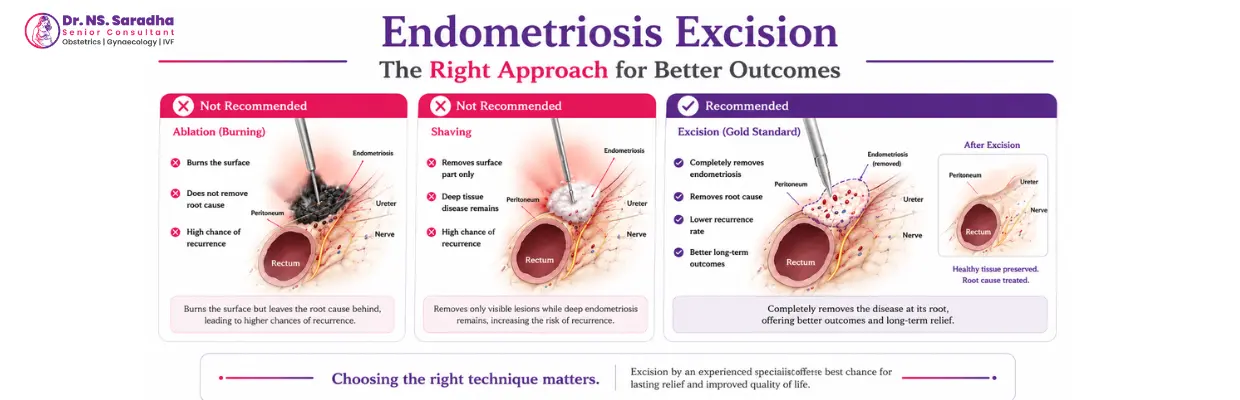
More importantly, she can treat the condition in the same sitting removing or destroying the abnormal tissue, draining cysts (endometriomas), and releasing any scar tissue (adhesions) that may have formed between organs.
Endometriosis can recur, So Dr. Saradha guides patients on long term management options after surgery to keep symptoms under control.
Laparoscopic tuboplasty is a surgical procedure to repair damaged or blocked fallopian tubes. The fallopian tubes play a key role in natural conception they carry the egg from the ovary to the uterus. When they are blocked or damaged (due to infection, previous surgery, or endometriosis), getting pregnant naturally becomes difficult.
Tuboplasty aims to restore the function of the fallopian tubes through careful surgical repair.
Women who have:
Dr. N.S. Saradha evaluates the extent of damage carefully before recommending tuboplasty. In some cases where both tubes are severely damaged, she may advise IVF as a more practical route to pregnancy. This honest guidance helps patients make informed decisions without wasting time.
Tuboplasty through laparoscopic procedures causes far less trauma to the surrounding tissue compared to open surgery. This means less scarring, which itself can interfere with future fertility. The small-incision approach gives Dr. Saradha excellent precision while keeping the patient's recovery smooth and short.
Salpingectomy is the surgical removal of one or both fallopian tubes. While this may sound concerning, there are very clear medical reasons why this procedure is sometimes the best course of action.
Dr. N.S. Saradha performs laparoscopic salpingectomy in Chennai as a safe, well established laparoscopic procedure with minimal recovery time.
Ectopic pregnancy is the most urgent reason. This is when a fertilised egg implants in the fallopian tube instead of the uterus. If not treated quickly, it can be life threatening. Removing the affected tube is often the safest and fastest solution.
Other reasons include:
If only one tube is removed, natural conception is still possible through the remaining tube. If both tubes are removed, pregnancy requires IVF. Dr. Saradha explains all of this clearly before surgery, ensuring patients are fully informed about the impact on their fertility and future options.
Recovery from a laparoscopic salpingectomy is quick typically one to two days in the hospital and about a week of rest at home.
Sometimes, symptoms like pelvic pain, bloating, or difficulty conceiving point to a problem inside the abdomen or pelvis, but scans and blood tests do not give a clear answer. In these cases, diagnostic laparoscopy becomes extremely valuable.
Diagnostic laparoscopy is a keyhole procedure where Dr. N.S. Saradha directly views the inside of the abdomen and pelvis using a small camera. It gives a clear, real-time picture of the organs something no scan can fully replicate.
Many women spend months or even years being investigated for unexplained pelvic symptoms. Diagnostic laparoscopy shortens this journey considerably. And in many cases, if a treatable condition is found during the procedure, Dr. Saradha can address it immediately in the same surgery saving the patient from a second procedure.
This makes diagnostic laparoscopy both a diagnostic and potentially therapeutic tool in one sitting.
The procedure is done under general anaesthesia, takes about 20 to 45 minutes, and most patients go home the same day. It is one of the safest laparoscopic procedures in Chennai available for women seeking answers.
Dr. N.S. Saradha brings a combination of surgical skill, clinical experience, and genuine patient care to every case. She takes time to understand each woman's concerns, explains procedures in plain language, and gives honest, individualised advice not a one size fits all approach.
Every laparoscopic procedure is planned carefully based on the patient's condition, overall health, and personal priorities (including fertility goals where relevant).
Patients choose Dr. Saradha because:
Laparoscopic procedures in Chennai have changed how women's health conditions are treated making surgery less painful, less disruptive, and easier to recover from. Whether you are dealing with fibroids, ovarian cysts, endometriosis, tubal problems, or you simply need a clear diagnosis, Dr. N.S. Saradha is equipped to help.
With the precision of minimally invasive surgery and the warmth of patient-focused care, Dr. Saradha guides each woman through her treatment journey with confidence and clarity.
If you are looking for laparoscopic procedures in Chennai or would like to discuss your condition with Dr. N.S. Saradha, reach out today to book a consultation.
Laparoscopy (keyhole surgery) uses a thin camera (laparoscope) and instruments inserted through small incisions (usually 5 to 10 mm) in the abdomen, inflated with CO₂ gas for visibility. Unlike open surgery, it requires no large abdominal incision, resulting in less pain, shorter hospital stay, faster recovery, and smaller scars.
Common laparoscopic procedures include treatment of endometriosis (excision or ablation), ovarian cystectomy, salpingectomy (for ectopic pregnancy or sterilisation), myomectomy (fibroid removal), hysterectomy, adhesiolysis, and investigation of chronic pelvic pain or infertility.
Risks include injury to nearby structures (bowel, bladder, ureter, major blood vessels) during port insertion or dissection, gas embolism, port site hernia, and conversion to open surgery if complications arise. Overall serious complication rates are low (around 1 to 2 per 1,000), but increase with complex procedures.
For minor procedures (diagnostic laparoscopy, cyst removal), most patients return to normal activities within 1 to 2 weeks. More extensive surgery (laparoscopic hysterectomy, severe endometriosis excision) may require 2 to 6 weeks. Shoulder tip pain from residual CO₂ is common in the first 24 to 48 hours.
A laparoscopic hysterectomy removes the uterus through keyhole incisions, either totally (TLH cervix removed too) or subtotally (cervix preserved). It is preferred over open hysterectomy for most benign conditions due to shorter recovery, less blood loss, and lower infection risk. It requires advanced surgical skill, especially when anatomy is distorted by fibroids or adhesions.
Take the first step toward better women’s health with expert, compassionate care at Dr. N.S. Saradha Women’s Health Centre. Get accurate diagnosis, advanced treatments, and personalized care designed to support safe recovery and long-term wellness at every stage of life.