Eating well in pregnancy does not have to be complicated. A simple pregnancy diet chart built around home foods like idli, dal, vegetables, curd and fruit can help you meet your changing nutrition needs. In general, aim for three balanced meals and two or three small snacks a day, with protein, vegetables, fruit, whole grains, dairy and enough water.
Every woman’s needs are different, so this guide gives general examples, not a personal prescription.
This guide is prepared for the patients and families of Dr. N.S. Saradha, a Senior Consultant in Obstetrics, Gynaecology and IVF in Chennai with over 30 years of experience in women’s healthcare, including antenatal and prenatal care and high-risk pregnancy care. Use it to plan your meals, and check with your own doctor before making big changes.
Why Is a Balanced Pregnancy Diet Important?
Your body works harder during pregnancy. Food gives you energy and the building blocks for your baby’s growth. Here is what the main nutrients do, in simple words.
Energy from rice, chapati, millets and other whole grains keeps you active through the day. Protein from dal, eggs, fish, chicken, paneer and curd helps your baby’s tissues and your own body. Iron helps make blood and carry oxygen. Low haemoglobin (anaemia) is common among Indian women, so iron needs extra attention.
Folate (vitamin B9) supports the early development of the baby’s brain and spine. You find it in green leafy vegetables, dal, beans and citrus fruits. Calcium and vitamin D support your bones and your baby’s bone growth. Iodine supports thyroid health, and iodised salt is a simple source.
Food works together with the tablets your doctor may prescribe, such as iron, folic acid or calcium. It does not replace them, and it does not replace regular antenatal check-ups. Please do not start or stop any supplement on your own.
Pregnancy Diet Chart for a Typical Indian Day
Use the sample pregnancy diet chart below as a starting point for your daily meals. This diet chart for pregnant women uses familiar foods, and you can swap items based on your taste, season and your doctor’s advice. Think of it as a pregnancy food chart for ideas, not a strict rulebook.
| Time of day | Suggested meal | Indian food examples | Nutritional contribution |
| Early morning | A light drink and a small bite | Warm water or boiled milk, 4–5 soaked almonds, 1–2 dates | Fluids, calcium, healthy fats, some iron |
| Breakfast | A protein-rich main meal | 2 idlis with sambar and chutney, or ragi dosa, vegetable upma, oats with nuts; add a boiled egg or paneer | Carbohydrates, protein, fibre, B vitamins |
| Mid-morning snack | Fresh fruit or a light snack | Guava, orange, apple or banana; or buttermilk or tender coconut water | Vitamin C, fibre, potassium, fluids |
| Lunch | A full plate with all food groups | Rice or chapati, dal or sambar, vegetable poriyal, keerai kootu, curd; fish curry or chicken (well cooked), or paneer, rajma or chickpeas | Protein, iron, folate, calcium, fibre |
| Evening snack | A protein-rich snack | Sundal (chickpea or green gram), roasted chana, a handful of nuts, or ragi malt | Protein, iron, calcium, energy |
| Dinner | A lighter, balanced meal | Chapati, dosa or millet upma with vegetable kurma or dal, a vegetable side and a small bowl of curd | Protein, fibre, calcium |
| Bedtime (optional) | A small, light snack | A glass of warm boiled milk, or a small banana if you feel hungry | Calcium, comfort, steady energy |
Vegetarian options: Choose dal, sprouts (cooked well), rajma, chickpeas, paneer, curd, milk and nuts in place of egg, fish or chicken.
This is a general example. It is not a personalised prescription or a fixed calorie plan. Portions depend on your appetite, activity, weight and health, and your doctor or dietitian can fine-tune it for you.
Diet Plan for Each Trimester
Your pregnancy diet chart does not need to stay the same for nine months. Instead of a strict month-by-month plan, it helps to think in three stages.
First Trimester Diet Chart
Early pregnancy can bring nausea and food dislikes. If your appetite is low, eat small meals every two to three hours instead of three big ones. Plain foods such as idli, curd rice, toast, puffed rice (pori) and bananas are often easier to manage. Ginger, a squeeze of lemon and cold foods can help if cooking smells bother you.
Sip fluids through the day. Try to include a little protein at each meal, such as dal, curd, egg or paneer, and folate-rich foods like keerai, dal and citrus fruits. If you cannot eat much for a few days, do not panic. Eat what you can tolerate. But if you are vomiting often or cannot keep fluids down, please speak to your doctor. No single food can prevent pregnancy complications, so the goal is simply steady, balanced eating.
Second Trimester Diet Chart
Appetite often improves in the middle months. This is a good time to bring in more variety. Add protein to every meal, fill about half of your lunch plate with vegetables, and include a fruit or two daily. Choose whole grains and millets more often.
For calcium, include milk, curd, ragi, sesame (ellu) and paneer. For iron, include keerai, beetroot, dates, dal, rajma and well-cooked chicken or fish. Add a vitamin C food, such as lemon, guava or orange, to iron-rich meals, because it helps your body absorb iron. Try to have tea or coffee between meals rather than with them, since they can reduce iron absorption.
Third Trimester Diet Chart
As your baby grows, there is less room in your stomach. Smaller, more frequent meals can feel more comfortable and may ease heartburn. Keep protein steady, and include fibre from vegetables, fruit and whole grains to help with constipation. Drink water regularly. Very oily or spicy food can worsen acidity, and it is best not to lie down right after eating.
Food needs depend on your health, activity, appetite and pregnancy circumstances. If you have a medical condition or have been given special advice, follow your doctor’s plan.
South Indian Meal Plan for Pregnancy
Tamil Nadu kitchens already have many pregnancy-friendly foods. The key is to build balanced meals rather than depend on one food.
A simple way is to fill about half your plate with vegetables, one-fourth with grains such as rice, chapati or millets, and one-fourth with protein such as dal, egg, fish, chicken or sundal. Add a bowl of curd.
Good home-cooked options include:
- Breakfast: idli or dosa with sambar, ragi dosa, ragi koozh, vegetable upma
- Lunch: rice with sambar or dal, vegetable poriyal, keerai kootu or keerai poriyal, curd
- Snacks: sundal, roasted chana, fruit, buttermilk
- Dinner: chapati or millet dishes with kurma or dal, and a vegetable side
A few small tweaks help. Add more dal and vegetables to sambar, go easy on oil, pickles and papad (they are high in salt), and cook fish and eggs thoroughly. Traditional foods are a healthy part of a balanced meal, but no food guarantees a particular health result.
Essential Nutrients During Pregnancy
| Nutrient | Why it matters | Food sources | Important note |
| Folate | Supports early brain and spine development | Keerai and other greens, dal, beans, oranges | Doctors usually advise a folic acid supplement; follow your doctor’s advice |
| Iron | Helps make blood and carry oxygen | Keerai, beetroot, dates, dal, rajma, well-cooked chicken or fish | Anaemia is common; iron tablets are decided by blood tests |
| Protein | Supports growth of the baby’s tissues and your body | Dal, eggs, fish, chicken, paneer, curd, sundal, nuts | Include some protein at every meal |
| Calcium | Supports bones and teeth | Milk, curd, ragi, sesame, paneer, greens | Calcium tablets, if needed, are prescribed by your doctor |
| Vitamin D | Helps your body use calcium | Safe morning sunlight, eggs, fortified foods | Food alone may not be enough; ask about testing and supplements |
| Iodine | Supports thyroid and brain development | Iodised salt, milk, curd | Use iodised salt in moderate amounts |
| Fibre | Helps digestion and eases constipation | Whole grains, millets, vegetables, fruits, dal | Increase slowly and drink enough water |
| Fluids | Support circulation and digestion | Water, buttermilk, tender coconut water, soups | Sip through the day; avoid too many sugary drinks |
Food sources are not the same as supplements. Your treating doctor will decide which supplements you need and how much.
Fruits and Vegetables to Include in a Pregnancy Diet
Fruits and vegetables give you vitamins, minerals and fibre. Aim for a variety of colours through the week. Oranges, guava, apple, banana, pomegranate and other seasonal fruits are good choices. For vegetables, include carrots, beetroot, beans, pumpkin, bottle gourd and green leafy vegetables like keerai.
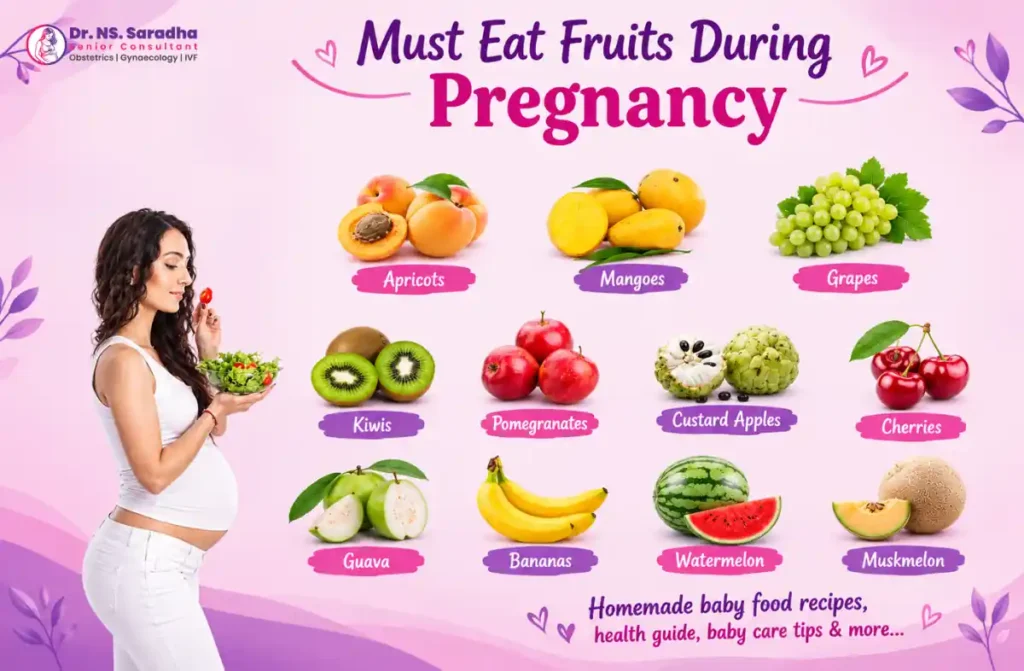
Hygiene matters as much as the choice. Wash fruits and vegetables well under running water, peel where suitable, and eat cut fruit fresh instead of leaving it out for hours. No single fruit or vegetable guarantees your baby’s growth or intelligence, so variety works better than relying on one “super food”. If you have high blood sugar, ask your doctor about fruit portions.
Vegetarian Pregnancy Diet Chart
A vegetarian pregnancy diet chart can meet most needs when it is planned well. Build meals around dal, beans, chickpeas, rajma, sprouts (cooked), milk, curd, paneer, nuts and seeds. Pairing dal with rice or chapati gives a good mix of plant proteins. Fortified foods can also help where available.
A few nutrients need extra attention:
- Vitamin B12 is found mainly in animal foods such as milk, curd and eggs. Strict vegetarians and vegans may need a supplement.
- Iron from plants is absorbed less easily. Add a vitamin C food, like lemon or guava, to the meal.
- Calcium and protein can be met with ragi, sesame, dairy, dal and paneer.
If you are vegetarian or vegan, or if you have signs of low blood levels, ask your doctor for a personal assessment.
Foods to Avoid or Handle Carefully During Pregnancy
Most home-cooked food is safe. The main goal is food safety, not fear. Please take care with these:
- Raw or undercooked eggs, meat, fish and shellfish. Cook them thoroughly. Be careful with half-boiled eggs and homemade mayonnaise.
- Unpasteurised or unboiled milk and soft cheeses made from it. Boil milk or choose pasteurised milk.
- High-mercury fish such as shark, swordfish, king mackerel and tilefish. Smaller fish like sardines (mathi) and anchovies (nethili), cooked well, are generally lower in mercury.
- Raw sprouts. Cook them well before eating.
- Unwashed produce and unhygienic street food. Choose freshly prepared, hygienic food.
- Alcohol. It is best avoided in pregnancy.
- Caffeine. Limit it. Many guidelines suggest staying under 200 mg a day, which is about one to two small cups of coffee depending on strength. Tea, cola and chocolate contain caffeine too.
There is no need to avoid ordinary fruits and vegetables because of myths. If someone tells you to avoid a particular food, ask your doctor before cutting it out.
Common Pregnancy Diet Mistakes to Avoid
These pregnancy nutrition tips can help you avoid common slip-ups:
- Skipping meals because of nausea. Eat small portions often instead.
- Eating from a narrow range of foods. Try to include different grains, dals, vegetables and fruits.
- Thinking tablets can replace meals. Supplements support your diet, they do not replace it.
- Taking herbal products or home remedies without medical advice. Some are not proven safe in pregnancy.
- Following strict or fad diets, or fasting for long hours. Please do this only with professional guidance.
Eating well is about balance, not perfection. A missed healthy meal is not a failure, so just begin again at the next meal.
When Should You Ask Your Doctor About Your Pregnancy Diet?
Any pregnancy diet chart you find online, including this one, is general. Some women need individual advice, especially if they have:
- Gestational diabetes or high blood sugar
- Anaemia or low haemoglobin
- A thyroid condition
- Frequent or persistent vomiting
- Food allergies
- A vegetarian or vegan diet
- Twins or a multiple pregnancy
- Any other medical concern or a high-risk pregnancy
Your doctor can check your reports and guide you. Please do not change prescribed medicines or supplements without medical advice. You can also read about pregnancy-related conditions that may need special food planning.
Conclusion
A pregnancy diet chart works best when it matches your health, your reports and your food preferences. If you would like personal guidance, you are welcome to consult Dr. N.S. Saradha. Not every reader needs a consultation, but advice is available whenever you have questions.
SIMS Hospitals, Vadapalani: No.1 – Jawaharlal Nehru Road, Chennai, Tamil Nadu – 600026 (next to Vadapalani Metro) Agna Clinic, Saligramam: No. 48, 7 – Muthukumarappa St, opp. to Arcot Road, Tamil Nadu – 600093
Timings can change, so please confirm when you book.