If your periods have gone irregular, or a scan report mentioned “cysts” on your ovaries, you have probably heard both terms thrown around by different people. Dr. N.S. Saradha explains the difference between PCOS and PCOD in plain language, so you know exactly what your diagnosis means and what to do next. These two conditions are related but not identical, and knowing which one you have changes how it is managed.
What Is PCOS?
PCOS stands for Polycystic Ovary Syndrome. It is a hormonal condition where the ovaries produce higher-than-normal levels of male hormones (androgens), which disrupts ovulation. This is not simply an ovary problem — it is a full-body metabolic and hormonal condition that can affect insulin levels, weight, skin, and hair growth as well as periods. Many women with PCOS also have some degree of insulin resistance, which is why diet and lifestyle play such a large role in managing it. Because it affects the whole endocrine system, PCOS usually needs longer-term, ongoing care rather than a one-time fix.
What Is PCOD?
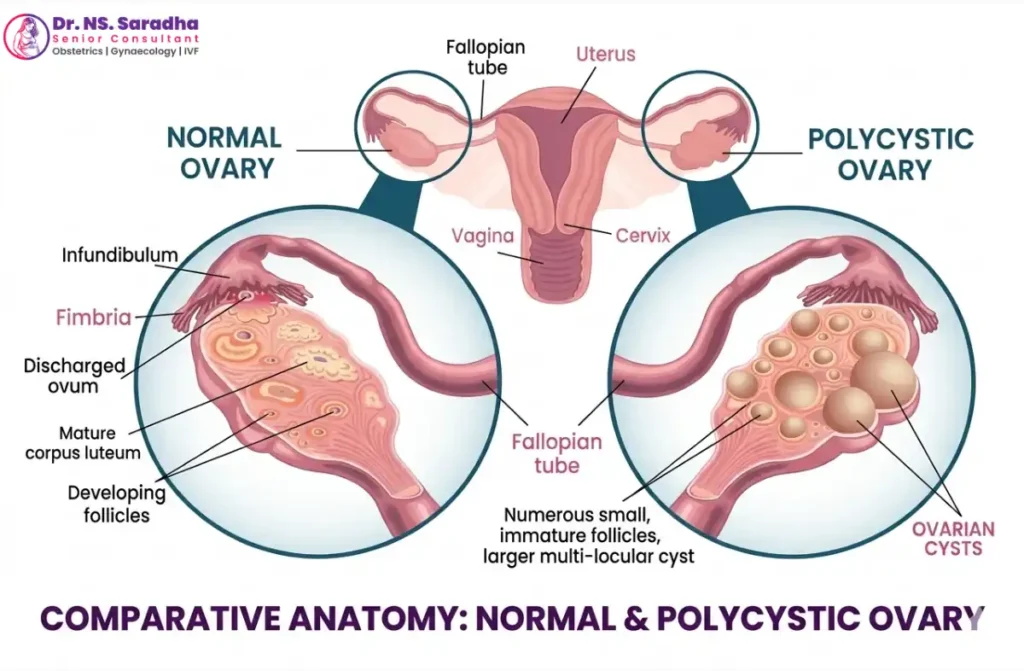
PCOD stands for Polycystic Ovarian Disease, and it is far more common than PCOS. Here, the ovaries release immature or partially mature eggs, which build up as small cysts over time and cause the ovaries to enlarge. It is largely driven by lifestyle factors such as poor diet, low physical activity, and stress, rather than a deeper hormonal disorder. Most women with PCOD can see real improvement with weight management, regular exercise, and better eating habits, often without needing long-term medication. It tends to be milder than PCOS and generally does not carry the same level of metabolic risk.
PCOS vs PCOD: Key Differences
At the core, the difference between PCOS and PCOD comes down to cause and severity. PCOD is a common, largely lifestyle-related condition where the ovaries produce excess immature eggs, while PCOS is a more complex hormonal and metabolic disorder that affects ovulation and hormone balance throughout the body. PCOS is considered a more serious endocrine condition, while PCOD is generally more manageable through daily habits.
Difference Between PCOS and PCOD at a Glance
- Nature: PCOD is largely a lifestyle-linked ovarian condition; PCOS is a hormonal and metabolic disorder.
- Cause: PCOD relates to poor diet and inactivity; PCOS relates to hormone and insulin imbalance.
- Severity: PCOD is usually milder; PCOS can affect fertility and long-term health more significantly.
- Fertility impact: PCOD rarely stops ovulation completely; PCOS often interferes with regular ovulation.
- Management: PCOD often improves with lifestyle changes alone; PCOS often needs medical treatment alongside lifestyle changes.
PCOS vs PCOD: Symptoms
While the two conditions overlap in some ways, the pattern and intensity of symptoms are usually different. Recognising which symptoms you have can help you and your doctor tell them apart before any test is even done.
Common Symptoms of PCOS
- Irregular or missed periods, sometimes for months at a time
- Excess facial or body hair growth (hirsutism)
- Acne or oily skin that does not respond well to usual treatment
- Noticeable weight gain, especially around the abdomen
- Thinning hair on the scalp
- Difficulty conceiving due to irregular ovulation
Common Symptoms of PCOD
Symptoms of PCOD are generally milder and more manageable. Periods may become irregular or slightly delayed, but they are less likely to stop altogether compared to PCOS. Weight gain can occur but responds well to diet and exercise changes. Mild acne or skin changes are common, but severe hair growth or hair thinning is less typical in PCOD. Pelvic discomfort or a feeling of heaviness in the lower abdomen is sometimes reported due to the enlarged ovaries.
How Symptoms Differ Between PCOS and PCOD
The clearest way to describe the difference between PCOS and PCOD through symptoms is intensity and consistency. PCOS symptoms tend to be more persistent, more hormonally driven, and harder to reverse through lifestyle changes alone. PCOD symptoms are usually milder, fluctuate with weight and activity levels, and respond faster once daily habits improve. If your symptoms are severe or not improving with lifestyle changes, it is worth getting properly evaluated rather than assuming it is only PCOD.
PCOS vs PCOD: Causes
Understanding what triggers each condition helps explain why their treatment paths are different.
What Causes PCOS?
PCOS is caused by an underlying hormonal imbalance, particularly elevated androgen levels and irregular signalling between the brain and ovaries. Genetics play a significant role, so it often runs in families. Insulin resistance is another major driver, where the body’s cells do not respond well to insulin, leading the body to produce even more of it. This excess insulin can further increase androgen production, creating a cycle that affects ovulation, skin, and weight together.
What Causes PCOD?
PCOD is mainly linked to everyday lifestyle factors. A diet high in processed or sugary foods, low physical activity, high stress levels, and disrupted sleep can all contribute to the ovaries releasing immature eggs. Unlike PCOS, there is usually no deep hormonal disorder driving it — the imbalance is more a result of daily habits than an underlying condition. This is exactly why correcting those habits often reverses PCOD symptoms fairly quickly.
Role of Hormonal Imbalance and Insulin Resistance
Hormonal imbalance and insulin resistance sit at the centre of the difference between PCOS and PCOD, even though both conditions can involve some degree of each. In PCOS, insulin resistance is usually more pronounced and directly worsens androgen levels, making the condition harder to manage with lifestyle changes alone. In PCOD, insulin resistance may be present but is typically milder, and improving diet and activity levels often brings hormone levels back into a healthier range without needing medication.
PCOS vs PCOD: Diagnosis
Getting the right diagnosis matters because it decides your entire treatment plan, and it is often the step that finally makes the difference between PCOS and PCOD clear to a patient.
How Is PCOS Diagnosed?
PCOS is usually diagnosed using a combination of symptoms, blood tests, and an ultrasound scan. Doctors look for at least two of three signs: irregular ovulation, higher androgen levels (confirmed through blood work or physical symptoms like excess hair growth), and multiple small follicles visible on an ultrasound. Blood tests may also check insulin, thyroid, and other hormone levels to rule out similar conditions. Because PCOS is a broader hormonal disorder, diagnosis often takes a closer, more detailed look than PCOD.
How Is PCOD Diagnosed?
PCOD is usually identified through a pelvic ultrasound that shows enlarged ovaries with multiple small, immature follicles. A physical examination and a review of your menstrual history are typically enough to support the diagnosis. Blood tests may still be done to rule out other hormonal issues, but they are not always essential for confirming PCOD the way they are for PCOS. The overall diagnostic process tends to be simpler and quicker.
Tests Used to Diagnose PCOS and PCOD
Common tests include a transvaginal or abdominal ultrasound to check the ovaries, blood tests for hormone levels such as LH, FSH, and testosterone, and fasting insulin or glucose tests to check for insulin resistance. A thyroid function test is often included as well, since thyroid issues can cause similar period irregularities. Your doctor will choose the right combination of tests based on your symptoms and history rather than running every test for everyone.
PCOS vs PCOD: Treatment
Treatment approaches differ because the underlying cause is different in each condition.
Treatment Options for PCOS
PCOS treatment usually combines lifestyle changes with medical management, since it involves a genuine hormonal imbalance. Doctors may prescribe medication to regulate periods, manage androgen levels, or support ovulation if you are trying to conceive. Insulin-sensitising medication is sometimes used when insulin resistance is significant. Ongoing follow-up is important, since PCOS is a long-term condition that needs periodic review rather than a single course of treatment.
Treatment Options for PCOD
PCOD often responds well to lifestyle-first treatment, without needing long-term medication. Weight management, a balanced diet, and regular physical activity are usually the first line of care. If periods remain irregular despite these changes, doctors may recommend short-term medication to regulate the cycle. Most women see noticeable improvement within a few months of consistent lifestyle changes.
Role of Diet and Exercise
Diet and exercise play a central role in managing both conditions, though the results can vary. A balanced diet with whole grains, lean protein, healthy fats, and plenty of vegetables helps stabilise insulin and hormone levels in both PCOS and PCOD. Regular exercise, even 30 minutes of brisk walking most days, improves insulin sensitivity and supports weight management. For PCOD, these changes alone often bring periods back to normal. For PCOS, diet and exercise remain essential but usually work best alongside medical treatment rather than replacing it.
When Is Medication Needed?
Medication is generally needed when lifestyle changes alone are not enough to regulate periods, manage symptoms, or support fertility. In PCOS, medication is more commonly required because the hormonal imbalance runs deeper and does not always respond fully to diet and exercise. In PCOD, medication is usually a shorter-term or supportive measure rather than an ongoing requirement. Your doctor will decide based on how your body responds over a few months of lifestyle changes.
PCOS and PCOD: Which Is More Serious?
This is one of the most common questions patients ask, and the honest answer depends on the individual case.
Is PCOS More Serious Than PCOD?
Generally, yes — PCOS is considered the more serious condition of the two. Because it involves a genuine hormonal and metabolic imbalance, PCOS carries a higher long-term risk of complications such as type 2 diabetes, high blood pressure, and fertility difficulties if left unmanaged. PCOD, on the other hand, is usually milder and responds well to lifestyle changes without progressing into a more complex condition. That said, severity varies from person to person, so a proper evaluation is more useful than assuming based on the label alone.
Can PCOD Turn Into PCOS?
PCOD does not typically “turn into” PCOS, since they are different conditions with different underlying causes rather than stages of the same disease. However, if PCOD is left unmanaged for a long time, with poor diet, no exercise, and ongoing weight gain, the resulting hormonal and metabolic changes can start to resemble PCOS more closely. This is another reason why addressing PCOD early, through simple lifestyle changes, is worth taking seriously rather than ignoring.
Long-Term Health Risks of PCOS and PCOD
Left unmanaged, PCOS is linked to a higher long-term risk of insulin resistance progressing to type 2 diabetes, high cholesterol, high blood pressure, and endometrial changes from irregular periods. PCOD carries fewer long-term risks overall, mainly related to prolonged irregular periods and weight gain if lifestyle factors are not corrected. In both cases, regular check-ups help catch any changes early, well before they become bigger health concerns.
PCOS vs PCOD and Pregnancy
Fertility is often the biggest concern for women learning about either condition, so it deserves a clear, direct answer.
Can You Get Pregnant With PCOS?
Yes, pregnancy is possible with PCOS, though it may take more time and support due to irregular ovulation. Many women conceive naturally once their cycles are regulated through diet, weight management, and, when needed, ovulation-supporting medication. In some cases, fertility treatment may be recommended if natural conception does not happen within a reasonable time. Early evaluation and a personalised plan make a real difference in outcomes.
Can You Get Pregnant With PCOD?
Yes, and in most cases, pregnancy is easier to achieve with PCOD than with PCOS, since ovulation is less severely disrupted. Once periods become more regular through lifestyle changes, many women conceive naturally without needing medical intervention. If irregular ovulation continues to be a challenge, simple medication can often help regulate the cycle and support conception.
How PCOS and PCOD Affect Fertility
Both conditions can affect fertility by disrupting regular ovulation, but the degree differs. PCOS more often causes longer gaps between periods or missed ovulation altogether, which can make timing conception harder without support. PCOD usually causes milder irregularities, so ovulation still happens, just less predictably. In both cases, tracking your cycle and getting an early evaluation if you are trying to conceive can help identify the right next step sooner rather than later.
PCOS vs PCOD: Diet and Lifestyle
Daily habits genuinely influence how both conditions progress, which is good news because it means you have real control.
Foods to Eat for PCOS and PCOD
- Whole grains such as brown rice, oats, and millets, instead of refined flour
- Lean protein sources like fish, eggs, chicken, and legumes
- Plenty of vegetables and fibre-rich foods to support digestion and blood sugar control
- Healthy fats from nuts, seeds, and olive oil
- Fresh fruits in moderation, especially lower-sugar options like berries and citrus
Foods to Avoid With PCOS and PCOD
- Sugary drinks, packaged juices, and sweetened beverages
- Deep-fried and heavily processed snacks
- Refined carbohydrates like white bread, maida-based foods, and pastries
- Excess caffeine, which can affect sleep and stress levels
- Foods high in trans fats, commonly found in packaged bakery items
Exercise and Weight Management
Regular movement helps regulate insulin levels and hormones in both PCOS and PCOD, and it does not need to be extreme to be effective. A mix of brisk walking, light strength training, and activities like yoga or swimming, done at least four to five times a week, tends to give the best results. Even a modest weight loss of 5 to 10 percent of body weight has been shown to noticeably improve symptoms and cycle regularity. Consistency matters far more than intensity, so building a routine you can actually sustain is the real goal.
Conclusion
Understanding the difference between PCOS and PCOD helps you make sense of your symptoms, ask the right questions, and follow the treatment plan that actually fits your condition. PCOD is generally milder and often improves with steady lifestyle changes, while PCOS usually needs a more structured, longer-term approach that combines lifestyle care with medical support. If you are dealing with irregular periods, unexplained weight changes, or difficulty conceiving, a proper evaluation with Dr. N.S. Saradha can help confirm which condition you have and guide you toward the right next step, with in-person consultations available for patients across Chennai.