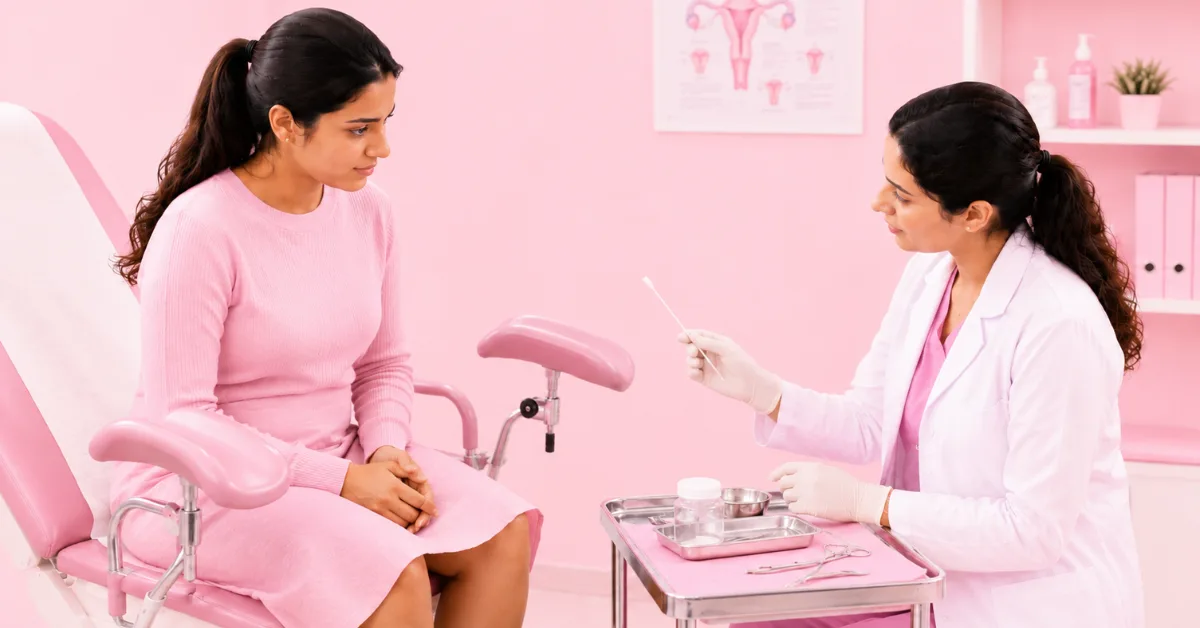
When it comes to women’s health, not every concern needs a hospital admission or major surgery. Many diagnostic and treatment steps can be done right in the clinic safely, quickly, and with minimal discomfort. These are what we call office & minor procedures.
Dr. N.S. Saradha is a gynaecologist in Chennai who has been performing office & minor procedures for women across different stages of life. Whether it is a routine check, a biopsy, or a small treatment, the focus is always on making the experience as smooth and stress-free as possible.
This page explains each office & minor procedure available at the clinic, what it involves, and who might need it. The goal is simple to help you come in knowing what to expect, without any confusion or worry.
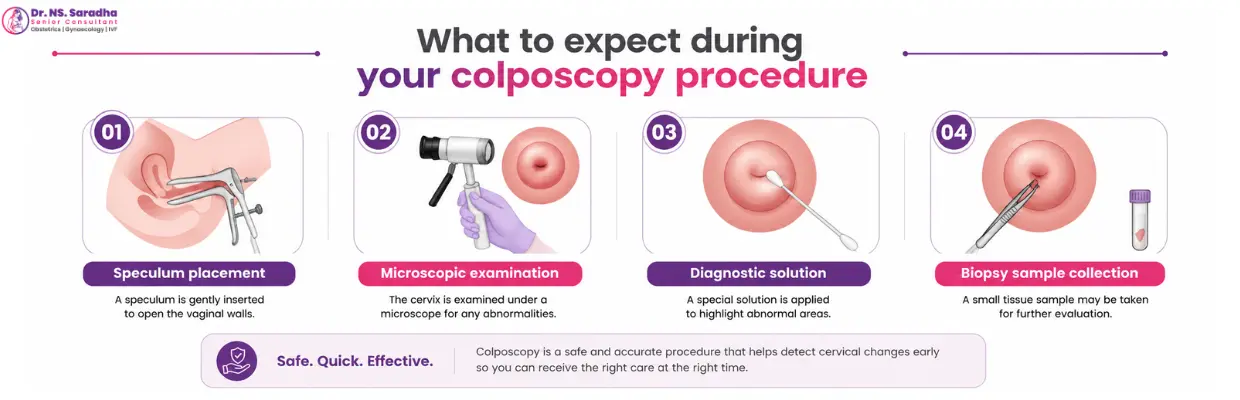
A colposcopy is a detailed examination of the cervix using a special magnifying instrument called a colposcope. It is usually done when a Pap smear result comes back abnormal and the doctor needs a closer look at the cervix.
A cervical biopsy may be done alongside the colposcopy. This means a very small sample of tissue is taken from the cervix so it can be examined under a microscope. The result helps confirm whether any changes in the cells are mild, moderate, or need further attention.
The procedure is done in the clinic and usually takes about 15 to 20 minutes. You will lie in the same position as during a regular pelvic examination. The colposcope does not touch or enter the body it only magnifies the view from outside. If a biopsy is taken, you may feel a brief pinch or mild cramp. Most women go home the same day with no significant discomfort.
Dr. N.S. Saradha explains each step before doing it, so there are no surprises. You will be informed of the results once the laboratory report is ready, and a follow up plan will be discussed clearly.
LLETZ (also called LEEP in some countries) stands for Large Loop Excision of the Transformation Zone. It is a treatment procedure for the cervix, done when a colposcopy or biopsy finds abnormal cells that need to be removed.
A thin wire loop with a mild electrical current is used to precisely remove the affected area of the cervix. The removed tissue is sent to the laboratory so the edges can be checked and a complete picture of the abnormality can be confirmed.
This is done as an office and minor procedure under local anaesthesia. The entire process takes about 20 to 30 minutes. You may feel mild pressure during the procedure. After it is done, light spotting or discharge for a few days is normal.
Dr. N.S. Saradha will give you clear instructions on what to avoid during the recovery period and when to come back for follow up. Most women return to normal daily activities within a day or two.
The endometrium is the inner lining of the uterus. An endometrial biopsy involves collecting a small tissue sample from this lining to check for any abnormal or unusual cell changes.
This procedure helps in diagnosing conditions like endometrial hyperplasia (thickening of the uterine lining), polyps, or early changes that could be associated with uterine cancer. It is a quick and important diagnostic step that gives a clear picture of what is happening inside the uterus.
The biopsy is done using a thin, flexible tube called a pipelle or suction cannula. It is passed gently through the cervix into the uterus. The process takes only a few minutes. Most women describe it as a brief cramping sensation, similar to period cramps.
No anaesthesia is usually needed, though a pain reliever tablet before the appointment can help manage discomfort. The tissue sample is sent to the lab, and results are usually available within a week.
Copper T and Mirena are two types of intrauterine devices (IUDs) small devices placed inside the uterus for long-term contraception.
The Copper T is a non hormonal option. It works by releasing copper ions that prevent fertilisation. It can stay in place for up to 10 years and is suitable for women who prefer to avoid hormones.
The Mirena is a hormonal IUD that releases a very small amount of progestin (levonorgestrel) locally. It is effective for up to 5 years and also helps reduce period pain and heavy bleeding. It is sometimes recommended for women with conditions like endometriosis or adenomyosis, not just as contraception.
Insertion is done during the clinic visit and takes about 5 to 10 minutes. It is performed after a routine examination to check the position and size of the uterus. A mild cramp may be felt during placement. After insertion, most women can resume normal activity the same day.
Dr. N.S. Saradha will discuss both options clearly, help you choose what suits your health and lifestyle, and explain what to watch for in the days following insertion.
The Bartholin's glands are two small glands located on either side of the vaginal opening. They produce fluid that helps with natural lubrication. Sometimes the duct of this gland gets blocked, causing a fluid-filled swelling called a Bartholin's cyst.
If the cyst becomes infected, it turns into a painful abscess. In such cases, drainage is needed to relieve the pressure and discomfort. This is done as a minor procedure in the clinic under local anaesthesia.
The procedure is done under local anaesthesia so the area is numb before anything is done. A small incision is made to drain the fluid or pus. In some cases, a small tube (word catheter) is placed temporarily to allow full drainage and prevent the cyst from refilling.
Recovery is usually smooth. The swelling reduces significantly after drainage. Dr. N.S. Saradha will advise on sitz baths and care at home to help with healing.
A vulval biopsy involves taking a very small tissue sample from the vulva the outer part of the female genitalia. It is done when there are visible changes on the skin such as unusual patches, sores, thickening, or persistent itching that does not respond to routine treatment.
The tissue sample is sent to a laboratory for detailed analysis. This helps confirm or rule out conditions such as lichen sclerosus, vulval dysplasia, or other skin conditions that need specific treatment.
The area is numbed with a local anaesthetic injection before the biopsy is taken. A small punch or shave biopsy is performed, and the sample is taken from the most relevant spot. The procedure takes only a few minutes. Mild soreness at the site is normal for a day or two after.
Results from the laboratory usually take about a week. Based on the findings, Dr. N.S. Saradha will explain what was found and what the next steps look like.
A cervical polyp is a small, soft growth that develops on the cervix. Most polyps are non cancerous (benign), but they can cause symptoms that affect quality of life. A cervical polypectomy is the procedure of removing these polyps.
Polyps are usually found during a routine pelvic examination or Pap smear. Removal is recommended when they are causing symptoms or when the doctor wants to send the tissue to the lab for confirmation.
This is one of the simplest office & minor procedures. The polyp is gently twisted or cut off at its base using a small instrument. The procedure takes only a few minutes and causes minimal discomfort most women describe it as a mild pinch.
No anaesthesia is typically needed for small polyps. The removed tissue is sent to the lab for analysis. There is usually no downtime, and women can return to their normal routine the same day.
Many gynaecological concerns that feel worrying can actually be addressed through a quick and well managed office and minor procedure without needing a hospital stay or surgery.
Dr. N.S. Saradha offers a full range of office & minor procedures in Chennai, from diagnostic steps like colposcopy and biopsies to treatment procedures like LLETZ, polypectomy, and IUD insertion. Each procedure is explained clearly before it is done, and the focus is always on your comfort and well being.
If you have been told you need one of these procedures, or if you are looking for a gynaecologist in Chennai for a second opinion or routine care, you are welcome to book a consultation.
Colposcopy is a clinic procedure using a magnifying instrument (colposcope) to examine the cervix closely, usually following an abnormal cervical smear or positive HPV test. Acetic acid and iodine solutions are applied to highlight abnormal areas. A biopsy is taken if indicated. It does not usually require anaesthetic and takes about 15 to 20 minutes.
LLETZ (Large Loop Excision of the Transformation Zone) uses a thin wire loop with electrical current to excise abnormal cervical tissue under local anaesthetic, usually at colposcopy. It is the standard treatment for CIN 2 to 3 (cervical intraepithelial neoplasia) and provides a specimen for histological assessment. The procedure takes a few minutes and most women return to normal activities the same day.
An endometrial biopsy uses a thin plastic cannula (Pipelle) passed through the cervix to aspirate a small sample of uterine lining, usually in the clinic without anaesthetic. It is used to investigate abnormal uterine bleeding, postmenopausal bleeding, and to assess for endometrial hyperplasia or cancer. It samples approximately 4% of the endometrium and is not 100% sensitive.
Common office procedures include IUD/IUS insertion and removal, endometrial biopsy, outpatient hysteroscopy (diagnostic and minor operative), Pipelle sampling, cervical polypectomy, vulval biopsy, Bartholin’s Word catheter insertion, pessary fitting for prolapse, and cryotherapy or laser treatment of vulval/cervical lesions.
Most minor procedures cause mild cramping, light bleeding or spotting for 1 to 7 days, and occasional vaginal discharge. Patients are generally advised to avoid tampons, swimming, and sexual intercourse for 1 to 4 weeks depending on the procedure. Fever, heavy bleeding, offensive discharge, or severe pain should prompt urgent review as they may indicate infection or injury.
Take the first step toward better women’s health with expert, compassionate care at Dr. N.S. Saradha Women’s Health Centre. Get accurate diagnosis, advanced treatments, and personalized care designed to support safe recovery and long-term wellness at every stage of life.