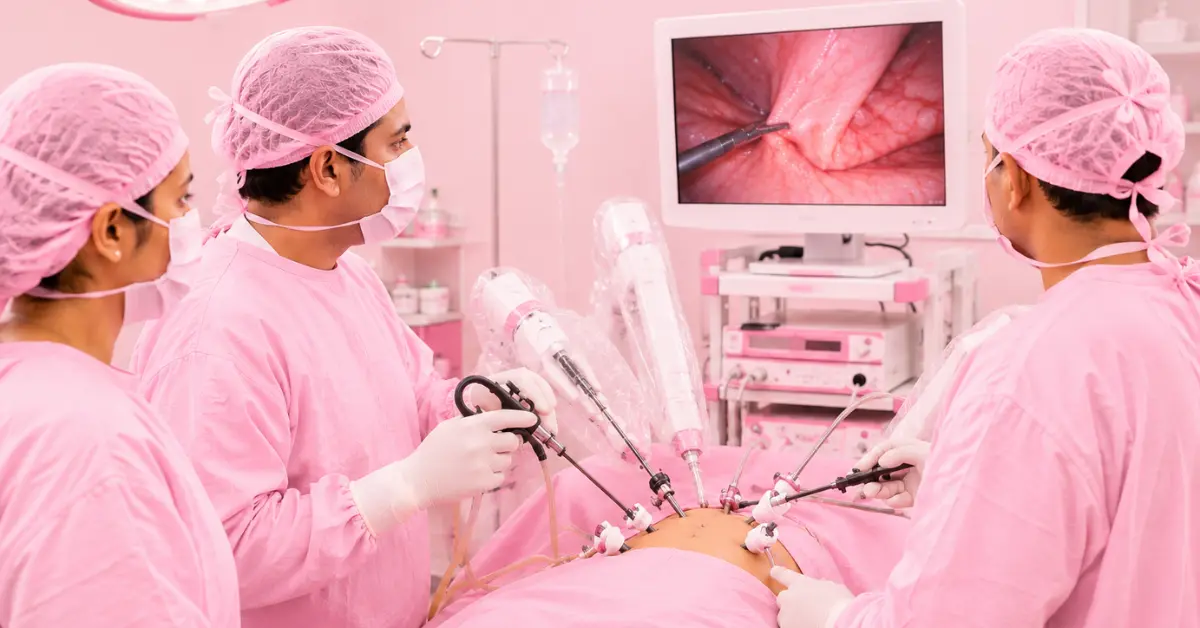
Every woman deserves to feel healthy, comfortable, and confident in her body. But sometimes, certain conditions make daily life difficult a dropped uterus, leaking urine when you laugh or sneeze, or discomfort during everyday activities. These are not things you have to live with quietly. There are safe, well established surgical options that can fix these problems and help you get back to normal life.
Dr. N.S. Saradha is a senior gynecologist surgeon in Chennai with years of hands-on experience in vaginal surgical procedures. She understands that these are personal and sensitive concerns, and she takes time to listen, explain, and guide each patient through the right treatment for their situation.
This page covers the vaginal surgical procedures that Dr. N.S. Saradha performs what each one means, why it may be needed, and what you can generally expect from the process.
A vaginal hysterectomy is the removal of the uterus (womb) through the vagina, without any cut on the abdomen. This approach leaves no visible scar, causes less pain after the procedure, and usually allows for a faster recovery compared to open surgery.
Doctors may recommend a vaginal hysterectomy for conditions such as:
Dr. N.S. Saradha carefully evaluates each patient before recommending this surgery. The goal is always to choose the option that is safest and most effective for that individual woman. As a specialist in vaginal surgical procedures in Chennai, she ensures that the procedure is tailored to your specific condition and health status.
Most women stay in the hospital for one to two days after the surgery. Recovery at home usually takes about two to four weeks. You will be advised to avoid heavy lifting and strenuous activity during this time. Regular follow up visits are scheduled to track your recovery.
The front wall of the vagina supports the bladder. Over time especially after childbirth or as the body ages this wall can weaken. When that happens, the bladder may press into the vagina, creating a bulge. This is called a cystocele or "bladder prolapse."
Anterior colporrhaphy is a surgical repair of the front vaginal wall. During this procedure, the weakened tissue is tightened and reinforced so the bladder goes back to its correct position.
This is one of the more commonly performed vaginal surgical procedures in Chennai for women dealing with pelvic organ prolapse. Dr. N.S. Saradha performs this repair using precise techniques to restore normal anatomy with good long-term results.
Recovery is usually smooth. Most patients return to light activity within a few weeks, with full recovery in about six to eight weeks. You will receive clear instructions on activity restrictions, pelvic floor exercises, and when to return for check ups.
Just as the front vaginal wall supports the bladder, the back wall of the vagina supports the rectum. When the back wall weakens, the rectum can press into the vagina a condition called rectocele.
Posterior colporrhaphy repairs this back wall. The procedure stitches and strengthens the tissue between the vagina and the rectum, restoring proper support.
This condition often develops after vaginal childbirth or with age, and it is more common than many women realize. Many women feel embarrassed discussing these symptoms, but this is a medical condition and it is very treatable.
Dr. N.S. Saradha approaches this with sensitivity. She discusses the symptoms, confirms the diagnosis, and explains the surgical plan in plain language before proceeding.
Posterior colporrhaphy is often done together with anterior colporrhaphy when both walls are weakened, restoring overall pelvic support in a single operation.
Stress urinary incontinence is when urine leaks during physical activity coughing, sneezing, laughing, jumping, or lifting something. This happens because the muscles and tissues supporting the urethra have weakened.
It is a common condition, especially after childbirth. Many women manage it silently for years before seeking help. The good news is that it is very treatable.
Both procedures are performed under anaesthesia and usually take less than an hour. Most patients go home the same day or the next morning.
Dr. N.S. Saradha will assess your symptoms, bladder function, and overall health to recommend the most suitable option between TVT and TOT. As an experienced gynecologist surgeon in Chennai, she has helped many women regain confidence and freedom through these procedures.
When the uterus has been removed (through a hysterectomy), the top of the vagina called the vaginal vault can sometimes lose its support and drop downward. This is called vaginal vault prolapse.
Sacrospinous ligament fixation is a surgical technique that corrects this. The vaginal vault is stitched and secured to a strong ligament inside the pelvis (the sacrospinous ligament), which anchors it back into the correct position.
This is a vaginal procedure no abdominal incision is needed. It is done entirely from inside the vagina, which means less pain, shorter hospital stay, and faster recovery.
Dr. N.S. Saradha performs this procedure with attention to both anatomy and long-term durability of the repair. The technique is well established and has a strong track record of restoring pelvic support effectively.
Most patients are up and moving the next day. You will be advised to avoid heavy lifting for six to eight weeks and attend scheduled follow-up appointments to confirm the repair is healing well.
Vaginal vault suspension is another surgical approach used to treat vaginal vault prolapse — where the top of the vagina falls down after a hysterectomy.
This procedure lifts and secures the vaginal vault to the ligaments or other supporting structures in the pelvis. Depending on the patient's anatomy and the degree of prolapse, the surgeon may approach this through the vagina or, in some cases, with laparoscopic assistance.
The specific technique used depends on the severity of the prolapse and the individual patient's health and anatomy. Dr. N.S. Saradha will discuss the best approach after a thorough examination.
The key difference between sacrospinous ligament fixation and vault suspension is the point of attachment and the surgical route. Both aim to achieve the same goal restoring the vault to its proper position for improved function and comfort.
Choosing between the two requires a proper clinical assessment. Dr. N.S. Saradha has extensive experience with both and will explain clearly why one approach suits your case better than the other.
These are functional and reconstructive procedures of the external and internal vaginal structures. While sometimes discussed in the context of cosmetic surgery, these procedures are most commonly sought for physical discomfort, functional concerns, or restoration after childbirth.
Labiaplasty involves reshaping or reducing the labia minora (inner vaginal lips) or labia majora (outer lips). Women seek this procedure for reasons that are very real and practical:
Dr. N.S. Saradha approaches labiaplasty with care, ensuring the primary focus is on the patient's comfort and well-being. The procedure is performed under local or general anaesthesia, and most women recover within two to four weeks.
Vaginoplasty refers to procedures that tighten or reconstruct the vaginal canal. After childbirth particularly after multiple deliveries the vaginal muscles and tissues can stretch and lose their tone. This may lead to:
Vaginoplasty tightens the vaginal muscles and surrounding tissue, restoring tone and improving function.
Both labiaplasty and vaginoplasty are personal decisions. Dr. N.S. Saradha provides a private, non-judgmental consultation where you can discuss your concerns openly. She explains what the procedure involves, what outcomes are realistic, and what recovery looks like — so you can make an informed decision.
Pelvic health is an important part of a woman's overall well-being and these conditions are more common than many people think. Prolapse, incontinence, post childbirth changes, and structural discomfort can significantly affect quality of life. The good news is that all of these are treatable.
Dr. N.S. Saradha is a dedicated gynecologist surgeon in Chennai who specialises in vaginal surgical procedures. She brings clinical expertise, compassion, and clear communication to every consultation. Whether you are dealing with prolapse, urinary leakage, or another vaginal health concern, she will work with you to understand your condition and find the right solution.
If you have been living with any of the symptoms mentioned on this page, you do not have to manage them alone. A consultation is the first step toward feeling better.
Vaginal surgery includes vaginal hysterectomy, anterior and posterior colporrhaphy (prolapse repair), vaginal vault suspension, repair of vesico-vaginal or recto-vaginal fistulas, Fenton’s procedure (for introital stenosis), and surgical treatment of vaginal cysts or Bartholin’s abscesses. Colposcopy-guided excision of cervical lesions (LLETZ) is also performed vaginally.
Vaginal hysterectomy leaves no external scars, has lower blood loss and infection rates than open surgery, and generally results in faster recovery than abdominal hysterectomy. It is preferred for uterovaginal prolapse. The main limitation is access it is more technically challenging in nulliparous women, large uteri, or where adnexal pathology needs addressing.
Anterior colporrhaphy repairs a cystocele (bladder prolapse) by plicating the pubocervical fascia under the anterior vaginal wall. Posterior colporrhaphy repairs a rectocele (rectal prolapse) by reinforcing the rectovaginal fascia. Both are performed vaginally and are often combined with other prolapse repairs. Recurrence rates vary (10% to 30% at 5 years).
TVT is a minimally invasive procedure for stress urinary incontinence, in which a synthetic mesh tape is placed under the mid urethra via small vaginal and suprapubic incisions, providing support during coughing or exertion. It has high long term success rates (70% to 80% cure at 10 years). Mesh complications (erosion, pain) are a recognised risk requiring counselling.
The Bartholin’s glands sit at the vaginal opening; their ducts can become blocked, forming a cyst, or infected, forming an abscess. Surgical options include simple incision and drainage (high recurrence), Word catheter insertion (promotes epithelialised tract), or marsupialisation (suturing the cyst open permanently). Recurrent cysts in older women may warrant gland excision and biopsy.
Take the first step toward better women’s health with expert, compassionate care at Dr. N.S. Saradha Women’s Health Centre. Get accurate diagnosis, advanced treatments, and personalized care designed to support safe recovery and long-term wellness at every stage of life.