Choosing the right doctor for a gynaecological surgery can feel overwhelming, especially when you are dealing with pain, irregular periods, or a diagnosis you don’t fully understand. I am Dr. N. S. Saradha, and for more than three decades, I have worked as a gynaecology surgeon in Vadapalani, helping women navigate everything from fibroids to complex pelvic conditions with clarity and care. My approach combines advanced surgical skill with genuine listening, because every treatment plan should start with understanding what a woman is actually going through, not just her test results.
Why Choose Dr. N. S. Saradha as Your Gynaecology Surgeon in Vadapalani?
Patients choose Dr. N. S. Saradha for her three decades of hands-on surgical experience, her focus on minimally invasive techniques that reduce pain and recovery time, and her honest, unhurried consultations. She combines advanced training in laparoscopic and robotic gynaecology with a communication style that helps women feel informed at every step.
Over 30 Years of Experience in Women’s Healthcare
I began my career at Stanley Medical College, and over the decades I have treated thousands of women, from teenagers with irregular cycles to women in their sixties dealing with prolapse. That range of experience means I have usually seen a version of whatever a patient is going through, which helps me explain things calmly instead of alarming them.
Expertise in Advanced Gynaecological Surgeries
I trained specifically in laparoscopic and robotic-assisted gynaecological surgery so that most of my patients can avoid large open incisions. A woman who might once have needed a week in hospital for a fibroid removal can now often go home within one or two days, with a much smaller scar and less pain.
Patient-Centered and Compassionate Care
Every consultation starts with a conversation, not a checklist. I remember one patient who came in convinced her heavy bleeding meant something serious; a simple ultrasound and a clear explanation of adenomyosis put her mind at ease long before we discussed any treatment.
Personalized Treatment Plans for Every Woman
No two patients with the same diagnosis get exactly the same plan. A 28-year-old trying to conceive with a fibroid is managed very differently from a 55-year-old with the same fibroid who has completed her family, and I walk each patient through why her plan looks the way it does.
About Dr. N. S. Saradha
Dr. N. S. Saradha
- Location: Vadapalani, Chennai
- Qualification: MBBS, MS (Obstetrics & Gynecology)
- Specialty: Obstetrics, Gynecology & Fertility (IVF)
- Experience: 30+ years
Dr. N. S. Saradha, a trusted Gynaecology surgeon in Vadapalani, brings over 30 years of hands-on experience to women’s health and reproductive medicine. She completed her MBBS and went on to earn her MS in Obstetrics and Gynecology, building a strong clinical foundation in both routine checkups and complex surgical care.
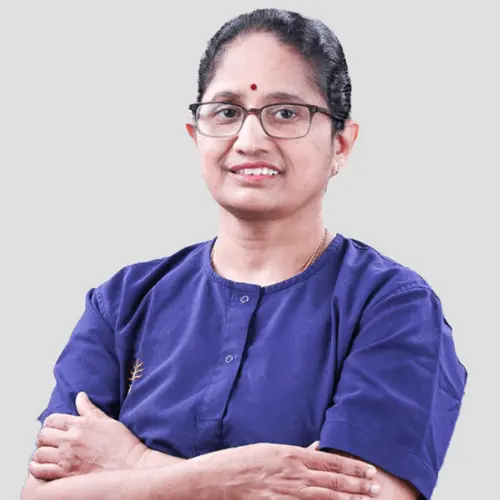
Patients across Chennai choose her because, she combines deep medical knowledge with a calm, patient approach. Her training covers everything from prenatal care to advanced gynecological surgery, giving her the range to handle a wide variety of women’s health needs under one roof.
Over three decades, her work has included thousands of deliveries, hundreds of gynecological surgeries, and countless fertility consultations. This depth of experience means she has likely seen and treated cases similar to yours before.
She is especially known for her expertise in minimally invasive procedures. As a Gynaecology surgeon in Vadapalani, she performs laparoscopic, hysteroscopic, and robotic-assisted surgeries, which typically mean smaller incisions, less discomfort, and quicker recovery for her patients.
Beyond surgery, she also focuses on hormonal health, PCOS, and fertility treatment. Many women turn to her not just for surgical care but for ongoing guidance through pregnancy, menopause, and everyday gynecological concerns.
Her practice is based at SIMS Hospitals, Vadapalani, where patients can consult her directly. She is committed to explaining every step of a diagnosis or treatment plan clearly, so patients always feel informed and supported
Areas of Specialization
Dr. N. S. Saradha offers care across the following areas:
- Laparoscopic & Robotic-Assisted Surgery – Minimally invasive procedures for fibroids, cysts, and other gynecological conditions, with smaller incisions and faster recovery
- High-Risk Pregnancy Care – Close monitoring and management for pregnancies that need extra attention
- PCOS & Hormonal Disorders – Diagnosis and treatment plans tailored to each patient’s hormonal health
- Infertility & IVF Treatment – Fertility evaluations, ovulation induction, and assisted reproduction support
- Hysteroscopic Procedures – Diagnostic and corrective procedures for uterine conditions
- Menstrual Disorders – Treatment for irregular, heavy, or painful periods
- Urogynecology – Care for pelvic floor and bladder-related concerns
- Routine Gynecological Care – Annual checkups, screenings, and preventive women’s health services
Professional Memberships
I hold memberships with recognized obstetric and gynaecological associations that require ongoing education, which keeps my surgical techniques and treatment protocols current with international standards.
Hospitals and Practice Location
I consult and operate from my Vadapalani practice, making it convenient for women across Vadapalani, KK Nagar, Ashok Nagar, and Virugambakkam to reach me for both consultations and follow-up care.
Conditions Treated by Our Gynaecology Surgeon
As a gynaecology surgeon in Vadapalani, I see a wide range of conditions every week, and most of them are far more manageable than patients initially fear once we have a clear diagnosis.
Uterine Fibroids
Fibroids are non-cancerous growths in the uterus. Many women have them without knowing, because small fibroids often cause no symptoms. When symptoms do appear, they can include heavy periods, long periods, pelvic pressure, back pain, or needing to pass urine often. Small fibroids that cause no trouble are usually just monitored with regular ultrasound scans. If fibroids affect your daily life or your chances of conceiving, treatment can help. Options include medicines to control bleeding and, when needed, myomectomy, which removes the fibroids and keeps the uterus. Most women recover well, and keyhole surgery usually means a shorter hospital stay and a quicker return to routine.
Ovarian Cysts
Most ovarian cysts resolve on their own within a few menstrual cycles. Persistent or large cysts are evaluated with ultrasound and, if needed, removed laparoscopically while preserving healthy ovarian tissue.
Endometriosis
Endometriosis happens when tissue similar to the lining of the uterus grows outside it, often on the ovaries or in the pelvis. It is a common cause of long-term pelvic pain. Many women notice painful periods, pain during intercourse, pain while passing stools or urine, or trouble conceiving. Because these signs look like other conditions, the right diagnosis often takes time. A clinical examination and ultrasound are the first steps, and laparoscopy may be advised when needed. Treatment can include pain-relief medicines, hormone therapy, or keyhole surgery to remove the tissue. Many women feel much better with the right plan.
Adenomyosis
Adenomyosis happens when uterine lining tissue grows into the muscular wall of the uterus, often causing heavy, painful periods. Treatment ranges from medication to surgery, depending on a woman’s age and fertility plans.
Abnormal Uterine Bleeding
Bleeding that is heavier, longer, or more irregular than usual deserves proper evaluation rather than being dismissed as normal. I work through hormonal, structural, and other causes systematically before recommending treatment.
Pelvic Organ Prolapse
Prolapse, where pelvic organs shift downward due to weakened support tissue, is far more common than most women realize, especially after childbirth or menopause, and is treatable with both non-surgical and surgical options.
Urinary Incontinence
Leakage during coughing, sneezing, or exercise is often linked to pelvic floor weakness. As a women’s health specialist Vadapalani patients trust for urogynaecology, I offer both conservative and surgical approaches depending on severity.
PCOS
Polycystic ovary syndrome affects periods, fertility, and metabolic health. Management usually combines lifestyle guidance, medication, and close monitoring rather than surgery in most cases.
Cervical Disorders
Abnormal Pap smear results or cervical changes are evaluated promptly with colposcopy when needed, so that any necessary treatment happens early, when it is simplest and most effective.
When Is Surgery Needed?
Not every gynaecological problem needs surgery. Many conditions improve with medicines, lifestyle changes, or regular monitoring. Surgery is usually considered when other treatments have not given enough relief, or when the condition is affecting your health, daily routine, or plans for pregnancy.
Common reasons include heavy bleeding that does not settle with medicines, fibroids or cysts that keep growing, severe pelvic pain, or prolapse that affects comfort. Your doctor will first confirm the cause with an examination and scans. Then she will explain every option, including non-surgical ones, so you can decide with full information.
If surgery is advised, a keyhole method is chosen whenever it is safe, because it usually means smaller scars and a quicker recovery.
Gynaecological Surgeries We Perform
When surgery is genuinely the right option, I favor techniques that are as minimally invasive as possible. A skilled gynaecology surgeon in Vadapalani should always be able to explain why a particular surgical approach fits a specific patient, not just perform the same procedure for everyone.
Laparoscopic Hysterectomy
Laparoscopic hysterectomy is a keyhole surgery to remove the uterus. The surgeon makes a few small cuts and uses a thin camera and fine instruments, so there is no large cut on the abdomen. It may be advised for heavy bleeding, large fibroids, adenomyosis, or other conditions that have not improved with medicines. Compared with open surgery, patients usually have less pain, a smaller scar, and a shorter hospital stay of one to two days. Most women return to light activity within one to two weeks. Your doctor will explain whether this surgery suits you and what other options you have before any decision is made.
Myomectomy
Myomectomy is a surgery that removes fibroids while keeping the uterus in place. It is often the preferred choice for women who wish to have children in the future. Depending on the size and position of the fibroids, it can be done through keyhole surgery, through the uterus with a camera, or with a small open cut. Keyhole surgery usually means smaller scars, less pain, and a faster recovery. Most women stay in hospital for one to two days and return to routine activities within a few weeks. Your doctor will suggest the method that suits you after scans and a clear discussion of your plans.
Ovarian Cyst Removal
Cysts are removed laparoscopically whenever possible, protecting as much healthy ovarian tissue as we can.
Hysteroscopy
A thin camera passed through the cervix lets me examine and treat conditions inside the uterus, such as polyps or abnormal bleeding, often without any external incision at all.
Endometriosis Surgery
Laparoscopic removal of endometriosis tissue can significantly reduce pain and, in many cases, improve fertility outcomes.
Urogynaecological Surgery
Procedures to correct prolapse or incontinence are tailored to each woman’s anatomy and lifestyle, with the goal of restoring comfort and confidence.
Robotic Gynaecology Surgery
Robotic assistance gives me finer control and better visualization during complex procedures, which can translate into more precise surgery and quicker recovery.
Minimally Invasive Procedures
Across nearly all the surgeries I perform, the underlying philosophy is the same: achieve the same surgical goal through the smallest possible incision.
Cost of Gynaecological Surgery in Vadapalani
The cost of gynaecological surgery is different for every patient. It depends on the type of surgery, the method used (keyhole, robotic, or open), and the hospital room you choose. The length of your hospital stay, the tests needed before surgery, and the medicines after surgery also change the final bill.
Before any surgery, Dr. Saradha explains the plan clearly so you know what to expect. The hospital’s billing team can give you an estimate in advance. If you have health insurance, you can ask them whether your plan covers the procedure and how the claim process works.
To get a clear estimate for your case, book a consultation and share your reports.
Symptoms That Require Consultation with a Gynaecology Surgeon
Heavy Menstrual Bleeding
Soaking through a pad or tampon every hour, or bleeding for more than seven days, is a sign worth getting checked rather than managing quietly for months.
Chronic Pelvic Pain
Pain that lasts more than a few months, or that disrupts daily life, deserves a proper workup to identify the cause.
Pain During Intercourse
This symptom is common but not something women should simply accept; it often points to a treatable underlying condition.
Irregular Menstrual Cycles
Cycles that are consistently unpredictable can signal hormonal imbalances that benefit from evaluation, especially if a woman is also trying to conceive.
Difficulty Conceiving
If pregnancy hasn’t occurred after a year of trying (or six months for women over 35), a fertility evaluation can identify treatable factors.
Urinary Leakage
Leakage that happens regularly, not just occasionally, is worth discussing, since effective treatments exist at every severity level.
Pelvic Pressure or Mass
A sensation of pressure, fullness, or a noticeable mass in the pelvis should always be examined promptly.
Benefits of Minimally Invasive Gynaecological Surgery
- Smaller incisions — less visible scarring and lower infection risk
- Reduced pain — many patients need far less pain medication afterward
- Faster recovery — most women return to normal activities in days rather than weeks
- Less blood loss — safer procedures overall, especially for anaemic patients
- Minimal scarring — a meaningful benefit for younger patients especially
Diagnosis Before Gynaecological Surgery
Pelvic Examination
A thorough physical exam remains the first step in understanding most gynaecological concerns.
Ultrasound Scan
Ultrasound gives a clear, safe picture of the uterus and ovaries and is usually the first imaging test I order.
Blood Tests
Hormone levels, blood counts, and other markers help confirm a diagnosis or rule out other causes.
Hysteroscopy
Beyond treatment, hysteroscopy is also a valuable diagnostic tool for directly viewing the inside of the uterus.
MRI or CT Scan (When Needed)
For more complex cases, advanced imaging helps map out anatomy precisely before surgery.
Recovery After Gynaecological Surgery
Hospital Stay
Most minimally invasive procedures involve a hospital stay of just one to two days, compared with much longer stays for open surgery.
Recovery Timeline
Many patients resume light activity within a week and full activity within four to six weeks, depending on the specific procedure.
Post-Operative Care Tips
I guide every patient through wound care, activity restrictions, and warning signs to watch for, so recovery feels manageable rather than uncertain.
Follow-Up Appointments
Follow-up visits let us confirm healing is on track and address any questions that come up once a patient is home.
Why Patients Trust Dr. N. S. Saradha
Trust is built case by case, not through claims. I aim to make sure every patient understands her diagnosis, her options, and the reasoning behind whatever we decide together.
Evidence-Based Treatment
Every recommendation I make is grounded in current medical guidelines, not outdated habits or assumptions.
Advanced Surgical Techniques
Continual training in laparoscopic and robotic methods means patients benefit from techniques that reduce pain and downtime.
Focus on Women’s Long-Term Health
Treatment doesn’t end at surgery; I focus on long-term outcomes, including fertility, hormonal health, and quality of life.
Comprehensive Care from Diagnosis to Recovery
From the first consultation through post-operative follow-up, patients have one consistent point of contact rather than being passed between different providers.
Visiting Us in Vadapalani
For women searching for a gynaecologist near KK Nagar, the Vadapalani practice is easily accessible by road and public transport, with parking available for those driving in. Patients from KK Nagar, Ashok Nagar, and Virugambakkam regularly visit for both first consultations and follow-up care. As a full-service obstetrician and gynaecologist Vadapalani patients rely on for pregnancy care as well as gynaecological surgery, the clinic is equipped to support women through every stage of their reproductive health journey.
Conclusion
Whether you’re dealing with fibroids, unexplained pelvic pain, or simply want a thorough gynaecological check-up, finding a gynaecology surgeon in Vadapalani you can trust makes all the difference. With over 30 years of experience, I aim to give every patient clear answers, honest options, and care that respects both her health and her time. If you have questions or symptoms that need attention, I welcome you to book a consultation.