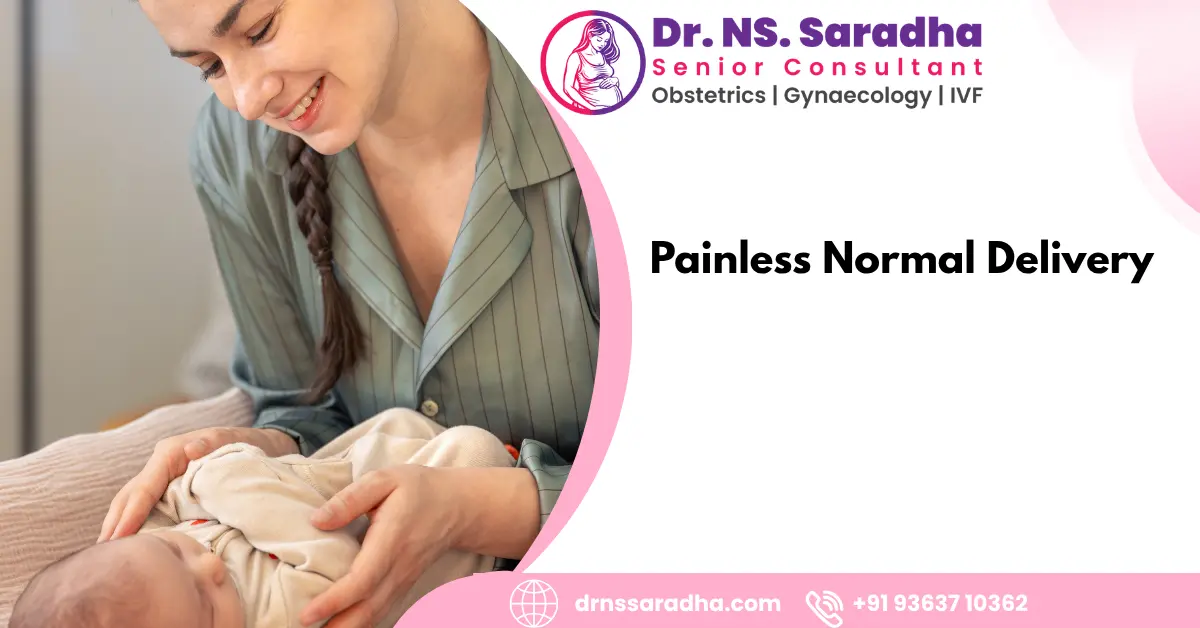
Labour pain is one of the biggest worries for women expecting a baby, especially for first-time mothers. The good news is that you have choices. In simple words, painless normal delivery means a vaginal birth where medicine, most often an epidural, is used along with comfort methods to ease the pain of labour.
The word “painless” needs a gentle clarification. Pain relief can make labour much more comfortable, but how much relief you feel is different for every woman. Many women still feel pressure or tightness, and some feel relief only in patches.
Dr. N.S. Saradha is a Senior Consultant in Obstetrics, Gynaecology and IVF with over 30 years of experience in women’s healthcare. Painless delivery through epidural analgesia is listed under her obstetrics services. This guide explains your options in plain language, so you can talk to your doctor and plan with confidence.
What Is Painless Normal Delivery?
Many families use the phrase painless normal delivery to describe a vaginal birth in which pain relief is added during labour. Your baby is still born through the birth canal. The difference is that medicine and support are used to make contractions easier to handle.
A caesarean delivery is different. It is a surgery in which the baby is born through a cut in the abdomen and uterus. A vaginal delivery with pain relief is not a surgery. Choosing pain relief and choosing the mode of delivery are two separate decisions.
Which approach is right for you depends on your health, how your labour is progressing, your wishes, and your baby’s condition. Sometimes the plan changes during labour, and that is perfectly fine. The goal is always a safe birth for you and your baby.
How Does Painless Delivery Work?
There are five common ways to ease labour pain: an epidural, breathing techniques, relaxation, continuous support, and movement or position changes. Other medicines may also be used in some hospitals. Many women combine more than one method.
Epidural Analgesia During Labour
An epidural is the method most women have in mind when they ask about painless normal delivery. An anaesthesia professional trained in this work places a very thin, soft tube in your lower back, close to the nerves that carry labour pain. Numbing medicine then flows through the tube in small, controlled doses. You stay awake the whole time.
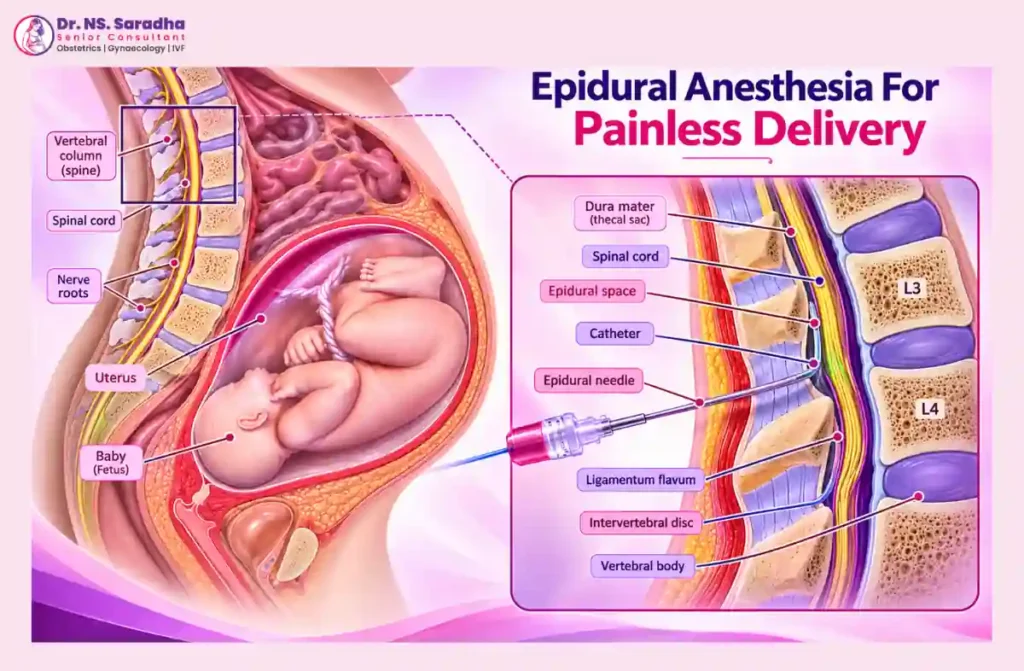
Most women begin to feel relief within about 10 to 20 minutes after the medicine starts. Because the tube stays in place, the dose can be adjusted as labour goes on. This can help you rest during a long labour and feel calmer when it is time to push.
An epidural also has limits. It may not remove all pain, and some areas may feel less numb than others. Your legs may feel heavy for a while. You will need a drip, regular blood pressure checks, and monitoring of your baby’s heartbeat. Some women need a small tube to help pass urine.
Possible side effects include a drop in blood pressure, itching, a mild fever, and temporary leg weakness. A headache after the procedure is uncommon. Serious problems such as infection or nerve injury are rare. Whether an epidural is available and suitable for you depends on your hospital’s facilities, the trained team on hand, and your own health.
Non-Medical Pain Relief Methods
Many women find comfort in simple methods that can be used alone or with an epidural:
- Slow, deep breathing during contractions
- Relaxation and calm music
- Continuous support from your birth partner, nurse, or doula
- Walking, changing positions, or using a birthing ball when your doctor says it is safe
- A warm shower, gentle massage, or a warm compress on the back
These methods can help you cope with labour, but they do not promise to remove pain completely.
Other Medical Pain Relief Options
Depending on the hospital, other pain relief may be offered, such as inhaled gas or injected pain medicines. A local numbing injection may also be used close to the time of delivery. Each option has its own benefits and limits, and none is best for everyone. Your obstetrician can explain what is available and what suits you.
Benefits of Painless Normal Delivery
Women who choose painless normal delivery may enjoy better pain control, less distress during contractions, and a chance to rest if labour is long. Feeling calmer can also help you stay focused and take part in the birth.
It is important to be realistic. Pain relief does not guarantee a normal delivery, does not prevent complications, and is not always safer than other options. Each woman’s labour is different, and the right plan is the one that suits your health and your baby’s needs.
Is Painless Normal Delivery Safe?
Pain relief in labour is widely used around the world. When it is given by trained professionals with proper monitoring, it is considered a safe option for most women. Like any medicine, it has benefits and possible risks, and the right choice depends on your health, your labour, the monitoring available, and a careful check by your doctors.
Reviews of many studies, including a Cochrane review, have not shown a clear rise in caesarean births with epidurals. Some studies show a slightly higher chance of needing forceps or vacuum help, and the pushing stage may last a little longer. Side effects can happen, and rare complications are possible, as explained above.
The best step is an open talk with your obstetrician and the anaesthesia team. Share your medical history, your concerns, and your wishes, and ask any question that comes to mind. This page gives general information and is not a substitute for personal medical advice.
Who Can Consider Painless Delivery?
Many women who plan a vaginal birth can discuss pain relief with their doctor. Whether it suits you is decided after an individual check, never by a general rule.
Your care team will look at your medical history, your blood pressure and other health conditions, the medicines you take, and any bleeding-related concerns. They will also consider how your labour is progressing, your own wishes, and what the hospital can safely offer, including trained professionals who are available when you need them. If you have had a caesarean before, you can read about vaginal birth after caesarean too.
How to Prepare for Painless Normal Delivery
Preparing early for painless normal delivery helps you feel calm on the day. These simple steps can help:
- Attend your regular antenatal appointments.
- Talk about your pain relief wishes before labour begins.
- Ask whether epidural analgesia is available where you plan to deliver.
- Learn the benefits, limits, and possible side effects of each option.
- Practise breathing and relaxation techniques.
- Prepare a flexible birth plan.
- Follow your care team’s advice when labour starts.
A birth plan is a guide, not a promise. It may change depending on how you and your baby are doing. Women with extra health needs can also read about high risk pregnancy care.
Painless Delivery in Vadapalani, Chennai
Choosing where to have your baby is a big decision. When you look for painless delivery in Vadapalani, it helps to know what to look for in maternity care:
- Qualified obstetric care
- Access to anaesthesia services if epidural analgesia is offered
- Facilities to monitor you and your baby
- Emergency support and referral arrangements
- Clear talks about your delivery options
- Antenatal counselling and follow-up care
Dr. N.S. Saradha’s obstetric care covers pre-pregnancy counselling, antenatal care, high-risk pregnancy care, painless delivery, vaginal birth after caesarean, and postnatal care. You can consult her at SIMS Hospitals, No.1 Jawaharlal Nehru Road, next to Vadapalani Metro, Chennai 600026, between 9:00 AM and 6:00 PM. Evening consultations are available at Agna Clinic, Saligramam, from 7:00 PM to 9:00 PM. Please confirm which pain relief options are available for your case when you book your visit.
Questions to Ask Your Doctor Before Choosing Labour Pain Relief
Bring this short list to your next antenatal visit:
- Which pain relief options are available at my delivery facility?
- Is epidural analgesia suitable for me?
- Who administers and monitors an epidural?
- What are the possible side effects?
- Can my pain relief plan change during labour?
- What happens if my preferred method is unavailable?
- What other options are there if I cannot have an epidural?
Discuss Your Labour Pain Relief Options With Dr. N.S. Saradha
Every birth is personal, and your comfort matters. If you are curious about painless normal delivery, the best time to talk about it is during your antenatal visits, so your choices are clear well before labour begins. Dr. N.S. Saradha takes time to explain each option, answer your questions, and plan with you. No one can promise a painless labour or a particular outcome, but a clear plan can help you feel prepared.
If you are looking for painless delivery in Vadapalani, you are welcome to book a consultation or call +91 93637 10362. You can also write to consult@drnssaradha.com.