Missed periods, a growing belly, tender breasts and morning nausea usually point to pregnancy. But for some women, a pregnancy test and an ultrasound show that there is no baby. This can be confusing, and it can be emotionally hard. Pseudo pregnancy symptoms are real physical changes, and the woman who has them is never at fault.
This guide explains pseudo pregnancy symptoms in simple words. You will learn what they are, why they may happen, how doctors confirm the diagnosis and what care is available. You will also learn when it is time to see a gynaecologist. This information is for awareness and does not replace a medical check-up.
What Is Pseudocyesis or False Pregnancy?
Pseudocyesis is a condition in which a woman has signs of pregnancy and may truly feel pregnant, but no baby is growing in her womb. The word comes from Greek. “Pseudo” means false and “kyesis” means pregnancy.
You may also hear it called false pregnancy or phantom pregnancy. All three terms mean the same thing. The body shows pregnancy-like changes without an actual pregnancy. A woman may miss periods, notice a larger belly and breast changes, and sincerely believe she is pregnant. Tests, however, show that she is not.
Pseudocyesis is rare. Medical sources estimate about 1 to 6 cases for every 22,000 births. It is reported most often in women between their late teens and their forties, but it can occur at other ages too. It was also more common before reliable pregnancy tests became widely available.
What Are the Common Pseudo Pregnancy Symptoms?
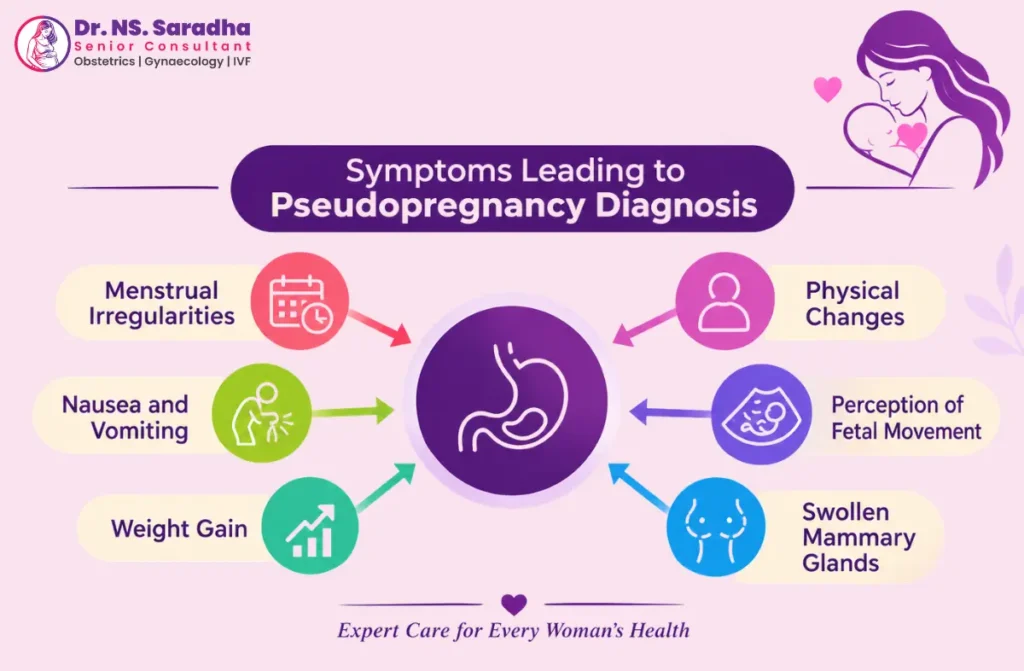
Pseudo pregnancy symptoms look a lot like the signs of early or mid-pregnancy. Not every woman has all of them. Some notice only one or two changes, while others notice many together. The strength of the symptoms and how long they last can also differ from person to person. Here are the most commonly reported false pregnancy symptoms.
Missed or Irregular Periods
A missed period is often the first change a woman notices. Periods may become late, light or irregular, and some women do not have a period for several months. Changes in the hormones that control the menstrual cycle may be one reason. Because a missed period is also the most common early sign of real pregnancy, it often makes a woman believe she is pregnant. Stress, thyroid problems, PCOS and perimenopause can also change periods, so a check-up is helpful.
Abdominal Swelling or Enlargement
Belly enlargement is one of the most commonly reported symptoms. The abdomen may grow slowly over weeks or months, much like in pregnancy. The cause, however, is different. Gas, fat gathering around the waist, constipation, fluid or urine retention, and a change in the curve of the lower back can all make the belly look bigger. The other body changes that usually come with pregnancy, such as the belly button pushing outward, are often not seen. An ultrasound shows that there is no baby.
Breast Tenderness and Changes
Breasts may feel tender, heavy or full. They may look larger, and the nipples may feel sensitive. Some women notice a small amount of milk-like fluid from the nipples. Hormones such as prolactin, which helps the body make milk, may play a role. Milk secretion can also happen with other hormone-related conditions, so a doctor may look for the exact cause.
Nausea and Vomiting
Some women feel sick in the morning, feel queasy around certain smells or even vomit, just as in early pregnancy. Hormonal changes and the body’s stress response can affect the digestive system, which may explain these feelings. Nausea and vomiting can also come from acidity or stomach infections, so ongoing symptoms should be checked.
Weight Gain and Appetite Changes
Many women eat more, crave certain foods or stop liking foods they enjoyed before. Body weight may slowly go up, and some women also pass urine more often. These changes can also be linked to thyroid or hormonal problems, which is one more reason to see a doctor.
Feeling Fetal Movements
Some women feel flutters, kicks or rolling movements in the belly. These feelings are very real to the woman. Doctors believe they are often caused by movement of the bowel, gas or small contractions of the belly muscles, and not by a baby. The movements may feel irregular and vary in strength and length. Some women also feel pain that resembles labour pain.
What Causes False Pregnancy?
There is no single confirmed cause. Experts believe that body-related (hormonal) factors and emotional factors may work together, and every woman’s story is different. Doctors also stress that a woman does not choose or create these symptoms on purpose. Understanding false pregnancy causes can help families respond with care and patience.
Hormonal Factors
Hormones control periods, breast changes and appetite. In pseudocyesis, hormone levels may change in a way that copies pregnancy. Studies mention raised prolactin, which can stop periods and cause milk secretion. Changes in the hormones that control ovulation, such as LH and FSH, have also been reported. However, prolactin is not high in every case, and research is still ongoing. This is why doctors do not depend on one test or one theory.
Emotional and Psychological Factors
Strong emotions can affect the body. Stress, anxiety, sadness, a deep wish to become pregnant, past miscarriages, the loss of a child and long struggles with infertility have all been linked with this condition. In some communities, there is also great social pressure to have children, and that emotional weight can be heavy. It is important to remember that emotional factors alone are not believed to explain pseudocyesis. They are thought to act together with changes in the body. There is no place for blame or judgement here.
Other Medical Conditions That Can Cause Pregnancy-Like Symptoms
Several health conditions can cause missed periods, belly swelling or breast changes. These include thyroid disorders, raised prolactin (sometimes from a small growth in the pituitary gland), PCOS, ovarian cysts, uterine fibroids and perimenopause. Rarely, certain tumours can release pregnancy-related hormones. Because of this, a doctor may suggest tests to rule out other causes before confirming pseudocyesis. You can read more about hormonal conditions and menopause and perimenopause on our website.
Pseudocyesis vs Early Pregnancy: What Is the Difference?
In the early stage, the physical signs of both can look almost the same. A woman may miss her period, feel sick, have tender breasts and notice a growing belly in both situations. The main difference is that in an actual pregnancy a baby is growing in the womb, and in pseudocyesis there is none.
A urine pregnancy test checks for the hormone hCG, which is made only during pregnancy. An ultrasound scan shows the womb directly and can show a baby and its heartbeat. These two tests are the key to telling the difference.
| Feature | Early or Actual Pregnancy | Pseudocyesis |
|---|---|---|
| Baby in the womb | Present and seen on ultrasound | Not present |
| Urine pregnancy test | Positive | Negative |
| Blood beta-hCG test | Raised | Not raised |
| Fetal heartbeat on scan | Seen | Not seen |
| Periods | Usually stop | Missed or irregular |
| Belly enlargement | Due to the growing womb and baby | Due to gas, fat, fluid or other causes |
| Feeling of movement | Baby movements | Often bowel or muscle movements |
Please remember that pseudo pregnancy symptoms alone can never confirm or rule out pregnancy. Only a proper test and scan can do that. If you think you may be pregnant, or if your symptoms do not match your test results, please see a doctor.
How Is Pseudocyesis Diagnosed?
A healthcare professional must assess each woman before making a diagnosis. The doctor usually follows these steps:
- Medical and menstrual history: The doctor asks about your periods, past pregnancies or losses, health conditions, medicines and when the symptoms started.
- Urine pregnancy test: This simple test checks for the pregnancy hormone hCG.
- Blood beta-hCG test: This is advised when clinically appropriate. It measures hCG more exactly than a urine test.
- Ultrasound examination: This is often the most helpful test. It shows whether a baby is present, and it can also show fibroids or ovarian cysts.
- Pelvic examination: This is done when needed to check the womb and the nearby organs.
- Further investigations: Blood tests such as thyroid and prolactin levels may be advised to look for other medical causes.
When the test and scan results are clear, the doctor explains them gently, so that the woman can understand what is happening in her body.
Is False Pregnancy the Same as Delusion of Pregnancy?
No, they are different conditions, although they can sound alike. In pseudocyesis, a woman has real physical signs, such as missed periods, belly swelling or breast changes, and she believes she is pregnant. In delusion of pregnancy, a person has a firm belief of being pregnant even when there are no physical signs of pregnancy at all.
The two conditions are managed in different ways. This is why professional assessment is important. A doctor can look at the physical findings, the test results and the person’s overall well-being, and then plan the right kind of care. It should always be done with respect and kindness, because both situations can be very distressing for the person and for the family.
What Are the Treatment Options for Pseudocyesis?
Care for pseudocyesis is planned for each individual. No single treatment works for everyone. Care may include:
- Clear communication of test and scan findings: Seeing a normal scan with the doctor often helps a woman understand her results.
- Treatment of any underlying condition: If a hormonal or medical problem is found, such as a thyroid or prolactin issue, it is treated.
- Emotional and psychological support: Caring conversations help a woman cope with the feelings that come with the news.
- Counselling or mental health support: This may be suggested when appropriate, especially after pregnancy loss or long fertility struggles.
- Follow-up appointments: The number and timing of visits depend on each woman’s needs.
For many women, symptoms ease once they receive clear test results and kind support. For some, recovery takes more time. Results can vary, and the doctor will guide you at every step.
Emotional Support and Care During False Pregnancy
A woman with pseudocyesis may feel sad, confused or even a sense of loss, as if she has lost a pregnancy. Compassion and understanding matter a great deal at this time. She should never be made to feel embarrassed or ashamed.
Family and partner support can make a big difference. Listening without judging, avoiding words like “imagination” or “drama”, and simply being present can bring comfort. Patients are also encouraged to share their worries openly with qualified healthcare professionals. Talking to a counsellor or a trusted person can help too. Our women’s mental and holistic health speciality page explains this kind of care.
When Should You Consult a Gynaecologist?
You should see a gynaecologist if you have:
- A missed period or irregular periods that continue
- A growing belly, or belly swelling that you cannot explain
- Breast tenderness or milk-like discharge when you are not pregnant or breastfeeding
- Nausea, weight changes or a feeling of movement along with a negative pregnancy test
- Pregnancy-like symptoms that last for weeks, or that upset you
Severe abdominal pain, heavy bleeding, fainting or dizziness need prompt medical attention. In such cases, an actual pregnancy or another medical condition may need to be ruled out quickly. Please do not wait or try to manage these symptoms at home.
Conclusion
Dr. N.S. Saradha is an Obstetrician and Gynaecologist with over 30 years of service in women’s healthcare. She is a Senior Consultant in Obstetrics, Gynaecology and IVF. According to her official website, her areas of care include menstrual and hormonal disorders, ovulation and infertility treatments, family planning, menopause management and care during pregnancy.
Unexplained pregnancy-like symptoms deserve a proper evaluation. A careful history, simple tests and a scan can bring clarity and peace of mind. You can learn more about her work under General Gynecology, Obstetrics and Fertility and Reproductive Medicine, or visit the About Dr. N.S. Saradha page.
In short, pseudo pregnancy symptoms can feel just like real pregnancy, but a test and a scan show the truth. With kind support and the right medical care, women can understand what they are going through and move forward with confidence.