
Most women notice vaginal discharge at some point. Many feel worried when its amount, colour, smell or thickness changes. In most cases, white discharge is a normal part of vaginal health and needs no medicine. But when it comes with itching, irritation, an unpleasant smell or pain, it should be checked by a doctor. Understanding white discharge treatment starts with one simple fact: the right care depends on the cause, and the cause can only be found after proper evaluation. This guide explains what normal discharge looks like, what can change it, how doctors find the reason, and when you should book a visit.
What Is White Vaginal Discharge?
Vaginal discharge is a fluid made by glands in the vagina and cervix (the lower part of the womb). It may sound unpleasant, but it is a sign of a healthy body doing its job. The fluid carries out old cells and bacteria, keeps the vagina moist and helps protect it from infection.
Normal discharge is usually clear or milky white. It does not have a strong smell and does not cause itching or burning. It may look thin and watery on some days and thicker or creamy on others. These changes follow your menstrual cycle. Many women see more discharge in the middle of the cycle, and a thicker, stickier type just before or after a period.
Every woman’s pattern is slightly different. What matters most is what is normal for you, and whether something has changed.
Normal White Discharge vs Abnormal White Discharge
The table below shows the usual differences. Use it as a guide, not as a way to diagnose yourself.
| Feature | Normal White Discharge | Abnormal White Discharge |
|---|---|---|
| Colour | Clear, milky or off-white | Yellow, green, grey or very thick white |
| Texture | Thin, watery, creamy or slightly sticky | Clumpy like cottage cheese, frothy or unusually watery |
| Smell | Mild or no smell | Strong, fishy or foul smell |
| Amount | Changes with the cycle but stays in your usual range | Sudden or long-lasting increase |
| Itching or irritation | None | Itching, redness, burning or soreness |
| Associated discomfort | None | Pain during urination or sex, pelvic pain |
No single sign can confirm an infection. A thick white discharge without itching may still be normal, while a mild change with a bad smell may need testing. If your discharge changes from your usual pattern or comes with other symptoms, a medical assessment gives you a clear answer.
Common Causes of White Vaginal Discharge
Some causes are natural and harmless. Others are infections or irritation that need care.
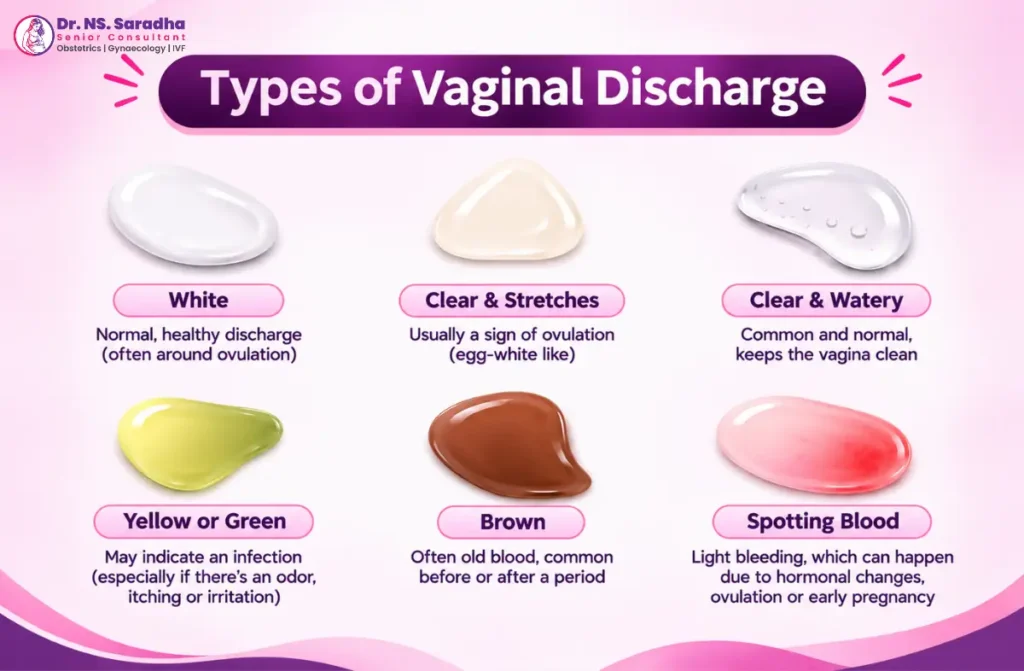
Natural Hormonal Changes
Oestrogen and progesterone rise and fall through the month, and the vagina responds to both. After a period, discharge is often scanty. As oestrogen rises, it becomes more noticeable. Before the next period, progesterone tends to make it thicker and creamier. Starting or stopping hormonal contraception can also change the amount and feel of discharge.
Ovulation
Around ovulation, when the ovary releases an egg, discharge often becomes clearer, wetter and more slippery, a little like raw egg white. This helps sperm travel. It usually lasts a few days and is not a sign of illness.
Pregnancy
Discharge often increases in pregnancy because of higher hormone levels and more blood flow to the pelvic area. It is usually thin, milky and mild-smelling. Tell your doctor if the discharge changes colour, smells bad, causes itching, or if you notice bleeding or a watery leak.
Yeast Infection
A yeast infection happens when a fungus called Candida grows more than usual in the vagina. It typically causes thick, white, clumpy discharge along with itching, redness and irritation around the vaginal opening. The discharge often has little or no smell. It can occur after antibiotic use, during pregnancy or with uncontrolled blood sugar.
Bacterial Vaginosis
The vagina has helpful bacteria that keep it healthy. When this balance is disturbed, other bacteria take over, and the condition is called bacterial vaginosis. It may cause thin white or grey discharge, often with a fishy smell that is more noticeable after sex or during periods. Itching is usually mild or absent.
Sexually Transmitted Infections
Some sexually transmitted infections, such as trichomoniasis, chlamydia and gonorrhoea, can change vaginal discharge. Symptoms vary a lot, and some women have no symptoms at all. Because discharge from an infection can look similar to other causes, testing is the only reliable way to know.
Vaginal Irritation and Sensitivity
Scented soaps, intimate washes, bubble baths, strong detergents, tight synthetic clothing and some sanitary products can irritate the delicate skin of the vulva and vagina. This may cause redness, itching, burning and extra discharge, even when no infection is present.
Menopause-Related Vaginal Changes
After menopause, lower oestrogen makes the vaginal lining thinner and drier. This can cause dryness, soreness, itching, discomfort during sex and sometimes a thin, watery discharge. These changes are common and can be managed with medical guidance.
Symptoms That May Occur Along With Abnormal White Discharge
Discharge on its own is rarely the full story. These symptoms, when they appear with it, suggest that something needs attention:
- Unusual or strong vaginal smell
- Vaginal itching
- Burning or irritation
- Redness or swelling of the vulva
- Pain or burning while passing urine
- Pain during sexual intercourse
- Lower abdominal or pelvic discomfort
- A change in the colour or consistency of discharge
- Unusual vaginal bleeding, such as bleeding between periods or after sex
Your doctor looks at the whole picture. The mix of symptoms, how long they have lasted and your health history help decide which tests, if any, are needed.
White Discharge Treatment Based on the Underlying Cause
There is no single treatment that suits every woman. Proper white discharge treatment begins with a diagnosis, and the plan then follows the cause. Medicines should be taken only when prescribed after an assessment. Guessing the cause and using leftover tablets or over-the-counter creams can hide the real problem or make it worse.
Treatment for Normal Physiological Discharge
Normal discharge does not need medication. If your doctor confirms that your discharge is healthy, the best “treatment” is reassurance. It helps to know your own pattern so you can recognise when something changes.
Treatment for Yeast Infection
When tests or examination point to a yeast infection, a doctor may prescribe an antifungal medicine. The choice depends on how severe the infection is, whether you are pregnant and whether it keeps coming back. Taking the full course as advised matters, even if symptoms settle early.
Treatment for Bacterial Vaginosis
Bacterial vaginosis is usually treated with prescribed antibiotics after a clinical assessment. Because its symptoms can look like a yeast infection, using an antifungal at home often does not help. Your doctor will also advise what to do if it returns.
Treatment for Sexually Transmitted Infections
Treatment depends on the specific infection found on testing. Sexual partners often need to be tested and treated too, so that the infection does not pass back and forth. Your doctor will explain this in a private, respectful way.
Treatment for Menopause-Related Vaginal Symptoms
If dryness or irritation is linked to menopause, your doctor will assess your symptoms and overall health, then suggest suitable ways to manage them. Options differ from one woman to another, so a personal consultation is important.
Treatment for Vaginal Irritation
When irritation is the cause, the first step is to find and stop the trigger, such as a new soap, wash or detergent. Your doctor may also guide you on soothing the area while it heals. Medicines are used only if they are truly needed.
How Is the Cause of White Discharge Diagnosed?
A gynaecologist works step by step to find the reason behind abnormal discharge. Not every woman needs every test.
Medical History and Symptom Assessment
The visit starts with a conversation. Your doctor may ask about your periods, pregnancy status, when the discharge began, how it looks and smells, and whether you have itching or pain. Medicines you use, past vaginal infections and contraception also matter. Be open about sexual health, as this helps the doctor choose the right tests.
Gynaecological Examination
If needed, a gentle examination checks for redness, swelling, inflammation or signs of infection on the vulva, vagina and cervix. The doctor will explain each step and you can ask to pause at any time.
Vaginal Swab Test
A swab is a quick, simple test. A small sample of discharge is collected and checked in the laboratory. It can show whether yeast, a bacterial imbalance or a specific infection is present.
Additional Laboratory Tests
Depending on your symptoms, your doctor may suggest a urine test, STI screening or other investigations. For example, burning during urination may need a urine check, and a pregnant woman may need extra tests to keep both mother and baby safe.
Home Care and Prevention Tips for Vaginal Health
Good daily habits keep the vagina comfortable and lower the chance of irritation. These steps support comfort, but they do not cure an infection once it has started.
- Wash only the outer genital area with plain water or a mild, unscented cleanser.
- Avoid scented intimate washes, sprays and vaginal deodorants.
- Do not douche. The vagina cleans itself, and douching upsets its natural balance.
- Wear comfortable, breathable cotton underwear.
- Change out of wet swimwear or sweaty clothes as soon as practical.
- Follow safe sexual health practices, including condoms where suitable.
- Do not use vaginal medicines on your own.
- Seek medical advice when unusual symptoms appear.
- Complete any treatment plan exactly as your doctor advises.
When Should You Consult a Gynaecologist for White Discharge?
Book an appointment if you notice any of the following:
- Discharge with a strong or unpleasant smell
- Thick, clumpy discharge with itching
- Yellow, green or grey discharge
- Burning while passing urine
- Pelvic or lower abdominal pain
- Pain during sexual intercourse
- Unusual vaginal bleeding
- Discharge that keeps coming back
- New or unusual discharge during pregnancy
Fever, significant pelvic pain or feeling seriously unwell needs prompt medical attention. If you are pregnant and have unusual discharge, bleeding, pain or a leak of fluid, contact your maternity care provider promptly.
White Discharge Treatment and Women’s Healthcare with Dr. N.S. Saradha
Dr. N.S. Saradha is a Senior Consultant in Obstetrics, Gynaecology and IVF. According to her official website, she has more than 30 years of experience in women’s healthcare, including gynaecology, fertility, pregnancy care and advanced surgical procedures. Her approach centres on patient comfort, careful diagnosis, preventive care and personalised treatment.
A consultation for discharge-related concerns is a chance to ask questions openly and get clear answers. It can include a careful review of your symptoms and reproductive health, an assessment of abnormal vaginal discharge, and the diagnosis and management of related gynaecological conditions. Treatment is planned for you as an individual, and follow-up is arranged when needed. The clinic also supports preventive women’s health, so you can learn how to protect your vaginal health in the long term.
If you have persistent or unusual discharge, do not wait for it to settle on its own. You can book a consultation at SIMS Hospitals, Vadapalani, or at Agna Clinic, Saligramam, by calling +91 93637 10362. You can also read more about Dr. N.S. Saradha before your visit.
For many women, the first step is a visit for general gynaecology care. If urinary symptoms such as burning or frequent urges appear along with discharge, the urogynaecology service may also be relevant. Women who have dryness or irritation around menopause can learn more about menopause and perimenopause care.
Conclusion
White discharge is often normal and healthy. It becomes a concern when its colour, smell or texture changes, or when it comes with itching, irritation or pain. The most important point to remember is that white discharge treatment depends on the underlying cause, whether that is hormones, yeast, bacteria, an infection, irritation or menopause. Using medicines on your own may not address the real condition and can delay proper care. If your discharge changes or you feel unsure, speak to Dr. N.S. Saradha for a clear diagnosis and a treatment plan made for you.