Starting a family is a deeply personal journey, and when it doesn’t happen as expected, having the right guidance matters. Many couples in and around Saligramam, when facing delays in conception, look for a Fertility Doctor in Saligramam who can explain what’s happening in simple terms and offer a clear path forward. Fertility care today is not just about tests and treatments — it’s about understanding each couple’s body, lifestyle, and emotional needs before recommending any next step. With the right support, most fertility concerns can be identified early and managed with a plan that fits the couple’s comfort and timeline.
Why Choose a Fertility specialist?
A fertility specialist has focused training that goes beyond general gynaecology, covering hormone imbalances, ovulation issues, and reproductive surgery in detail. This means they can pick up on subtle patterns — like irregular cycles or mild hormonal shifts — that a general check-up might miss. Specialists also stay updated on newer treatment options, so couples get advice based on current best practices rather than outdated methods. Choosing a specialist early often shortens the overall time it takes to find answers, since the right tests are ordered from the very first visit. It also means couples get one consistent doctor guiding them through every stage, instead of being passed between departments.
When Should You Consult a Fertility Doctor?
Doctors generally suggest a consultation if a couple has been trying to conceive for over a year without success, or over six months if the woman is above 35. Women with irregular or absent periods, known conditions like PCOS or endometriosis, or a history of pelvic surgery should consider an earlier visit. Men noticing concerns with sperm health, or couples who’ve had a previous miscarriage, also benefit from getting checked sooner rather than later. There’s no need to wait until frustration builds — an early conversation simply gives more options and more time to work with. A first visit is mainly about listening and understanding history, not jumping straight into treatment.
Common Fertility Problems Treated
- Irregular ovulation or absent periods
- Blocked or damaged fallopian tubes
- Low ovarian reserve or reduced egg count
- Sperm count or motility concerns
- Unexplained infertility with no clear medical cause
- Repeated pregnancy loss
Each of these problems has its own set of tests and treatment paths, and many couples are surprised to learn that a solution exists even when the cause seemed unclear at first.
About Dr. N. S. Saradha
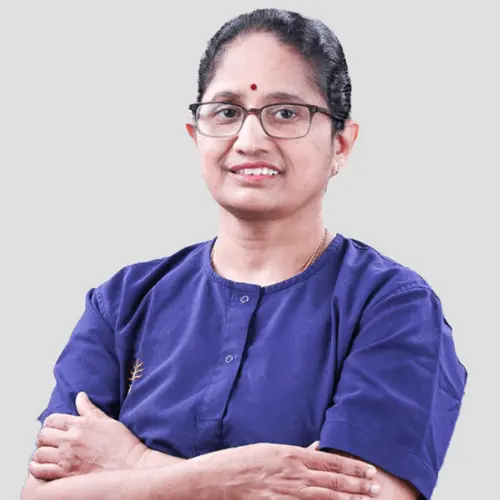
Dr. N. S. Saradha brings over three decades of hands-on clinical experience to her patients, which shapes the way she approaches every case. Her long career means she has seen fertility medicine evolve — from basic hormone treatments to today’s advanced lab-based options — and she applies that depth of experience to every consultation. Couples often mention that her calm, direct communication style makes complicated medical information easier to understand. As a trusted Fertility Doctor in Saligramam, she is known for taking the time to explain not just what test or treatment is being suggested, but why it’s the right fit for that particular couple.
Qualifications & Experience
Dr. Saradha’s academic and professional background reflects decades of focused training and hands-on practice in women’s reproductive health:
- MBBS and MD in Obstetrics & Gynaecology, Stanley Medical College, Chennai
- Fellowship of the International College of Surgeons (FICS)
- Diploma in Urogynaecology
- Over 30 years of clinical experience in women’s reproductive health
- Treated thousands of women and couples across routine gynaecology and complex infertility cases
This combination of formal qualifications and long-standing practice gives her a well-rounded, experienced perspective on even the more complex fertility cases.
Areas of Expertise
Her clinical focus spans infertility evaluation, IVF support, high-risk pregnancy management, and laparoscopic surgery, giving her a well-rounded view of reproductive health. This range matters because fertility issues are rarely isolated — a woman with fibroids, for instance, may also need pregnancy risk monitoring later. Dr. Saradha’s surgical background allows her to handle conditions like blocked tubes or endometriosis directly, without always needing to refer patients elsewhere. Her combined expertise in gynaecology and fertility means patients often get diagnosis, minor procedures, and treatment planning from a single, familiar doctor.
Patient-Centered Fertility Care
Every couple’s fertility journey looks different, and Dr. Saradha builds her treatment plans around that reality rather than a fixed checklist. She spends time understanding lifestyle, work stress, past medical history, and emotional readiness before recommending a course of action. This approach helps avoid unnecessary tests or treatments that don’t match a couple’s actual situation. Patients often describe feeling heard during consultations, which builds the trust needed for a treatment journey that can sometimes take a few months.
Advanced Fertility Treatment Approach
Dr. Saradha combines proven medical protocols with newer diagnostic tools to build treatment plans that are both safe and effective. She reviews hormone levels, scan reports, and semen analysis together rather than in isolation, since fertility often involves both partners. Treatment is typically introduced in stages — starting with simpler options like ovulation induction before moving to procedures like IUI or IVF if needed. This step-by-step approach helps couples avoid more intensive treatment than necessary, while still moving forward with urgency when the situation calls for it.
Fertility Treatments Offered
Fertility Evaluation
A fertility evaluation is usually the first step and involves a detailed history, physical exam, and a set of baseline tests for both partners. For women, this often includes hormone blood tests and an ultrasound to check the ovaries and uterus. For men, a semen analysis gives insight into sperm count, movement, and shape. This evaluation helps identify whether the issue lies with ovulation, sperm health, tubal blockage, or a combination of factors, which then shapes every treatment decision that follows.
Ovulation Induction
Ovulation induction uses oral or injectable medication to encourage the ovaries to release eggs more regularly. It’s commonly recommended for women with irregular cycles or conditions like PCOS, where ovulation doesn’t happen consistently on its own. The process is closely monitored through ultrasound scans to track follicle growth and time intercourse or procedures accurately. For many couples, this is often the first and simplest treatment tried before considering anything more involved.
Intrauterine Insemination (IUI)
IUI involves placing specially prepared sperm directly into the uterus around the time of ovulation, increasing the chances of fertilization. It’s a good option for mild male infertility, unexplained infertility, or when ovulation induction alone hasn’t led to pregnancy. The procedure itself is quick, done in-clinic, and doesn’t require anaesthesia. Many couples appreciate that IUI is less invasive than IVF, making it a reasonable next step before considering more advanced treatment.
In Vitro Fertilization (IVF)
IVF involves retrieving eggs from the ovaries, fertilizing them with sperm in a lab setting, and transferring the resulting embryo into the uterus. It’s typically recommended for blocked fallopian tubes, severe male infertility, low ovarian reserve, or after other treatments haven’t worked. The process involves several stages — hormone stimulation, egg retrieval, fertilization, and embryo transfer — each carefully monitored. Dr. Saradha walks couples through every stage in advance, so there are no surprises about what each step involves.
Intracytoplasmic Sperm Injection (ICSI)
ICSI is a specialized technique used alongside IVF, where a single sperm is injected directly into an egg to assist fertilization. It’s particularly useful when sperm count or movement is very low, or when previous IVF attempts haven’t resulted in fertilization. This method gives couples with significant male infertility factors a realistic path toward pregnancy that might not be possible with standard IVF alone. The rest of the process — embryo development and transfer — follows the same careful monitoring as standard IVF.
Male Infertility Evaluation
Male infertility contributes to a significant share of fertility challenges, yet it’s often overlooked in initial conversations. Evaluation typically starts with a semen analysis, checking sperm count, motility, and shape, along with a review of lifestyle and medical history. Depending on results, further hormone testing or scans may be recommended to identify underlying causes. Addressing male fertility factors early often simplifies the overall treatment plan for the couple.
Female Infertility Treatment
Female infertility treatment is tailored to the specific cause, whether that’s ovulation irregularity, tubal blockage, endometriosis, or age-related decline in egg quality. Treatment might range from medication and minor procedures to IVF, depending on what the evaluation reveals. Dr. Saradha reviews each case individually, since two women with a similar diagnosis may still need different treatment approaches based on age, prior history, and overall health.
Recurrent Pregnancy Loss Management
Couples who’ve experienced two or more pregnancy losses are usually offered a detailed evaluation to look for underlying causes, including hormonal, structural, or genetic factors. Testing may include blood work, ultrasound, and in some cases genetic screening for either partner. Once a cause is identified, or even when one isn’t clearly found, a monitored plan for future pregnancies can significantly improve outcomes. This kind of careful, methodical support often brings real relief to couples who’ve faced repeated disappointment.
Fertility Preservation
Fertility preservation, such as egg or embryo freezing, is an option for women who want to protect their fertility for personal or medical reasons, including before cancer treatment. The process involves ovarian stimulation followed by egg retrieval, similar to the early stages of IVF, with the eggs then frozen for future use. This option gives women more flexibility in timing their family planning around career, health, or personal circumstances, without the added pressure of a ticking clock.
Conditions Treated
PCOS-Related Infertility
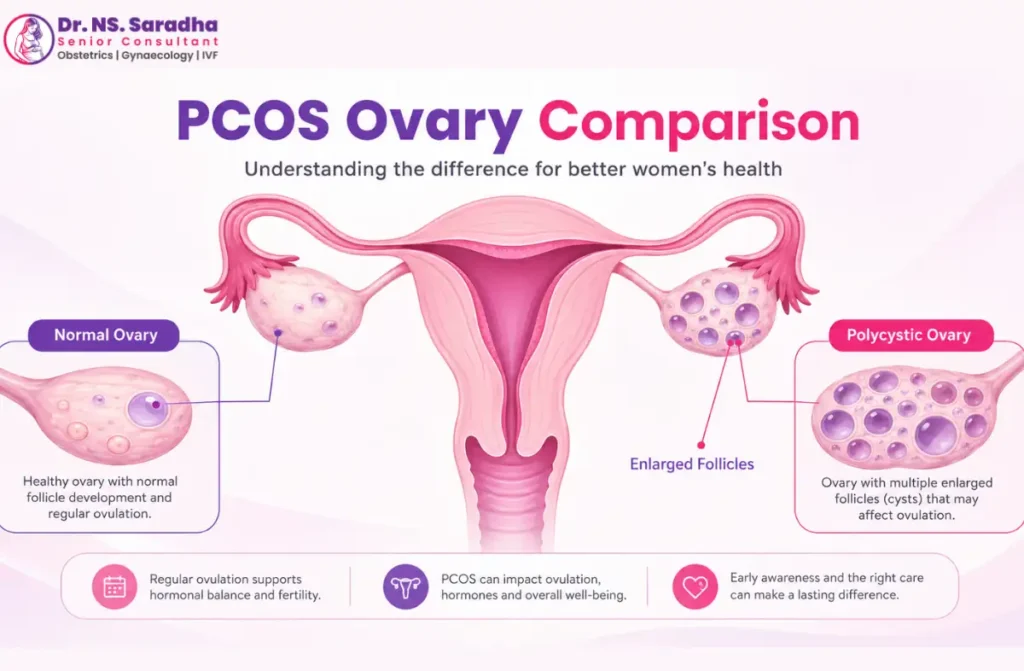
Polycystic Ovary Syndrome (PCOS) is one of the most common causes of irregular ovulation and fertility delays. Common signs that may point to PCOS include:
- Irregular or missed periods
- Delayed or absent ovulation
- Weight gain or difficulty losing weight
- Excess hair growth or acne linked to hormone imbalance
- Insulin resistance affecting treatment response
Treatment usually starts with lifestyle guidance and ovulation-inducing medication, since many women with PCOS respond well to these simpler measures. In cases where medication alone isn’t enough, IUI or IVF may be introduced. Dr. Saradha also monitors related concerns like insulin resistance closely, since it often accompanies PCOS and can affect how a woman responds to treatment.
Endometriosis
Endometriosis occurs when tissue similar to the uterine lining grows outside the uterus, which can affect the ovaries, tubes, and overall fertility. Diagnosis often involves ultrasound and, in some cases, laparoscopic surgery to both confirm and treat the condition at the same time. Depending on severity, treatment may range from medication to surgery to assisted reproduction like IVF. Because endometriosis can be a lasting condition, ongoing monitoring is usually part of the long-term plan.
Blocked Fallopian Tubes
Blocked tubes prevent the egg and sperm from meeting naturally, and this is diagnosed through a specific scan or dye test. Depending on the location and extent of the blockage, treatment might involve laparoscopic surgery to clear the tubes or moving directly to IVF, which bypasses the tubes altogether. The right choice often depends on the woman’s age and how long the couple has been trying to conceive.
Low AMH
Anti-Müllerian Hormone (AMH) levels give doctors an idea of a woman’s remaining egg reserve. A low AMH result doesn’t mean pregnancy isn’t possible, but it does often mean treatment timelines matter more. Depending on the number, doctors may recommend moving to IVF sooner rather than trying simpler treatments first, to make the best use of the eggs available.
Poor Ovarian Reserve
Poor ovarian reserve means fewer eggs are available than expected for a woman’s age, which can affect both natural conception and response to fertility medication. Treatment plans in these cases are often adjusted with specific stimulation protocols designed to make the most of the eggs that are available. Close monitoring throughout the cycle helps the medical team respond quickly to how the ovaries are reacting to treatment.
Unexplained Infertility
Sometimes, despite a thorough evaluation, no clear cause for infertility is found in either partner. This can be frustrating, but it doesn’t mean treatment isn’t possible — many couples with unexplained infertility go on to conceive with IUI or IVF. Doctors often use this term when all standard tests come back normal, which still leaves several effective treatment paths open.
Male Factor Infertility
Male factor infertility covers a range of issues, from low sperm count to poor sperm movement or shape. Depending on severity, treatment can range from lifestyle changes and medication to IUI, and in more significant cases, IVF with ICSI. A thorough semen analysis is usually the starting point for understanding which treatment path makes the most sense.
Advanced Diagnostic Facilities
Getting an accurate diagnosis early on makes the entire fertility journey smoother and helps avoid unnecessary delays.
Hormonal Testing
Hormonal blood tests check levels of key fertility-related hormones, giving insight into ovulation patterns and ovarian function. These tests are usually done at specific points in the menstrual cycle for the most accurate results. The findings help guide whether medication, further testing, or a different treatment path makes the most sense.
Ultrasound Follicular Monitoring
This involves a series of ultrasound scans over a few days to track how follicles are developing during a treatment cycle. It allows doctors to time procedures like IUI or egg retrieval precisely, improving the chances of success. It’s a routine but important part of most fertility treatment cycles.
Semen Analysis
Semen analysis checks sperm count, movement, and shape, giving a clear picture of male fertility health. It’s a simple, non-invasive test that often provides key information early in the evaluation process. Results guide whether treatment should focus on lifestyle changes, medication, or assisted techniques like IUI or ICSI.
Ovarian Reserve Assessment
This assessment, usually combining AMH blood testing with an ultrasound count of ovarian follicles, gives an idea of how many eggs a woman has remaining. It helps doctors set realistic expectations and choose treatment timelines that make the best use of that reserve. This information is especially useful for women considering IVF or fertility preservation.
Why Patients Trust Dr. N. S. Saradha
Trust is built over time, through consistent, honest communication and treatment plans that actually work for each couple’s situation. As a long-practicing Fertility Doctor in Saligramam, Dr. Saradha has built her reputation on this kind of steady, patient-first approach rather than one-size-fits-all protocols. Many patients return for follow-up pregnancies or refer family members, which speaks to the comfort and confidence she builds during treatment.
Personalized Fertility Plans
No two fertility journeys are identical, and Dr. Saradha’s plans reflect that reality rather than following a rigid template. She considers age, medical history, previous treatments, and personal preferences before recommending next steps. This personalized approach often means avoiding treatments that wouldn’t suit a particular couple, saving both time and unnecessary stress.
Compassionate Care
Fertility treatment can be an emotional experience, and Dr. Saradha’s approach makes space for that alongside the medical process. She takes time to answer questions fully, without rushing appointments, which patients consistently mention as a reason they feel comfortable returning. This kind of steady, patient support often makes a real difference in how couples experience their treatment journey.
Modern Fertility Technologies
Dr. Saradha stays current with modern diagnostic and treatment technologies, ensuring patients have access to reliable, up-to-date options. From advanced ultrasound monitoring to lab-based procedures like IVF and ICSI, her practice reflects ongoing developments in fertility medicine. This means patients aren’t limited to outdated methods when better options are available.
Ethical and Transparent Treatment
Every recommendation comes with a clear explanation of why it’s being suggested, what it involves, and what results can realistically be expected. Dr. Saradha avoids recommending treatments or tests that aren’t necessary for a particular case. This transparency helps couples make informed decisions at every stage, rather than feeling pressured into a particular path.
Benefits of Choosing a Fertility Doctor in Saligramam
Choosing care close to home makes a real difference during a fertility journey, which often involves frequent visits and monitoring. Working with a Fertility Doctor in Saligramam means shorter travel times for repeated scans and appointments, which matters especially during treatment cycles that require close tracking. It also means building a relationship with one consistent doctor throughout the process, rather than switching providers along the way.
Easy Accessibility
Saligramam’s central location makes it convenient for patients from across Chennai to reach the clinic without long commutes. For those specifically searching for an Infertility Doctor in Saligramam or an IVF Specialist in Saligramam, having a well-connected clinic nearby reduces the stress of frequent visits during treatment. This is especially helpful for procedures like follicular monitoring, which require scans on consecutive days. A Female Fertility Doctor in Saligramam who understands both the medical and practical side of treatment — including how travel and timing affect a couple’s routine — adds real convenience to an already demanding process.
Comprehensive Fertility Services
Having evaluation, diagnostics, and treatment available under one practice means fewer referrals and less repeated paperwork. Couples can move from initial consultation through to procedures like IUI or IVF without needing to coordinate between multiple clinics. This continuity often makes the process feel less fragmented and easier to follow.
Continuous Care Throughout the Journey
Fertility treatment isn’t a single appointment — it often unfolds over several months, with different stages requiring different types of support. Having one doctor oversee the entire journey means treatment decisions build on a full understanding of the couple’s history, rather than starting fresh each time. This continuity often plays a real role in how smoothly treatment progresses.
Conclusion
Fertility challenges can feel overwhelming, but the right guidance makes the path forward much clearer. Dr. N. S. Saradha brings over 30 years of experience, a wide range of treatment options, and a genuinely personalized approach to every couple she sees. Whether you’re just starting to explore your options or ready to begin treatment, a trusted Fertility Doctor in Saligramam can help you take that next step with clarity and confidence.