Pregnancy Related Conditions

Dedicated pregnancy-related condition support monitors pregnancy-related conditions, manages pregnancy-related condition risks, and ensures safe pregnancy-related condition outcomes.
Pregnancy Related Conditions

Recurrent Miscarriage

Losing a pregnancy is heartbreaking. When it happens more than once, it leaves many women feeling worried and confused. Recurrent miscarriage is defined as losing three or more pregnancies before 20 weeks. It affects around 1 in 100 women who are trying to conceive.

The reasons behind recurrent miscarriage vary. In some cases, chromosomal issues with the embryo are the cause. In others, it could be related to the shape of the uterus, hormone imbalances, blood clotting disorders, or immune system problems. Sometimes, no clear reason is found, which can feel frustrating but it does not mean future pregnancies will fail.

Dr. N.S. Saradha takes a thorough and compassionate approach to investigating recurrent miscarriage. After a detailed evaluation, she works with each woman to put a management plan in place before and during the next pregnancy.

What the evaluation includes:

  • Blood tests to check for clotting disorders and hormone level
  • Ultrasound to assess the uterine shape and structure
  • Genetic testing for both partners when needed
  • Review of thyroid function and other underlying conditions

With the right care and early monitoring, many women with a history of recurrent miscarriage go on to have healthy pregnancies. If you are experiencing this pregnancy-related condition in Chennai, please know you are not alone — and help is available.

Gestational Diabetes

Gestational diabetes is a type of high blood sugar that develops during pregnancy in women who did not have diabetes before. It usually appears in the second half of pregnancy and affects how your body uses glucose (sugar). While the name sounds alarming, it is manageable with the right guidance and regular monitoring.

If not managed well, gestational diabetes can affect the baby's growth and increase the chance of complications during delivery. It can also raise the mother's risk of developing type 2 diabetes later in life. However, with proper diet, exercise, and medical support, most women with gestational diabetes have healthy pregnancies and healthy babies.

Dr. N.S. Saradha provides complete care for women with gestational diabetes as part of her high-risk pregnancy services. She works closely with each patient to monitor blood sugar levels and adjust the care plan as needed throughout the pregnancy.

Signs that may suggest gestational diabetes:

  • Increased thirst or frequent urination
  • Feeling more tired than usual
  • Blurred vision in some cases
  • Often, there are no obvious symptoms which is why routine screening matters

How it is managed:

  • Personalised dietary guidance to control blood sugar
  • Safe physical activity recommendations during pregnancy
  • Regular blood glucose monitoring
  • Medication or insulin if lifestyle changes are not enough
  • Closer monitoring of baby's growth through ultrasounds

Early detection through the routine glucose tolerance test is key for managing this pregnancy-related condition treatment in Vadapalani. Dr. Saradha screens all her patients as a standard part of antenatal care.

Pre Eclampsia and Eclampsia

Pre-eclampsia is a serious pregnancy related condition that involves high blood pressure and signs of organ stress, usually after 20 weeks of pregnancy. It typically affects the kidneys and liver. Left untreated, it can progress to eclampsia, which involves dangerous seizures and is a medical emergency.

Pre-eclampsia affects roughly 5–8% of pregnancies worldwide, and while anyone can develop it, some women are at higher risk including those with a history of high blood pressure, kidney disease, diabetes, first-time pregnancies, or a family history of pre-eclampsia.

The exact cause is not fully understood, but it is believed to start in the placenta during early pregnancy. This is why careful monitoring from the first trimester is important for women who are at risk.

Common signs of pre-eclampsia:

  • Sudden rise in blood pressure
  • Swelling in the hands, feet, or face
  • Protein detected in the urine
  • Severe headaches
  • Visual disturbances or blurred vision
  • Pain in the upper right abdomen

Dr. N.S. Saradha monitors blood pressure closely at every antenatal visit and takes swift action if pre-eclampsia is suspected as part of comprehensive pregnancy-related condition care. The only true cure for pre-eclampsia is delivery, but with careful management, the pregnancy can often be safely prolonged until the baby is ready to be born.

Management may include:

  • Blood pressure medications to keep levels safe
  • Magnesium sulphate to prevent seizures if risk is high
  • Close foetal monitoring with ultrasounds and CTG
  • Hospital admission in moderate to severe cases
  • Planned delivery at the right time to protect both mother and baby

Dr. Saradha's experience in managing high-risk pregnancies means that women with pre-eclampsia receive attentive, skilled care at every stage.

Placenta Praevia

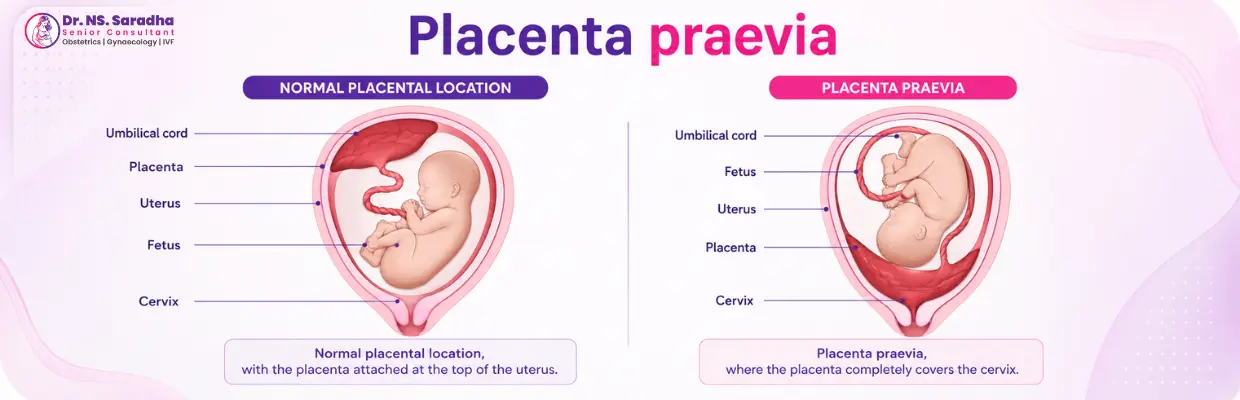
The placenta is the organ that nourishes the baby during pregnancy. Normally, it attaches to the upper part of the uterus. Placenta praevia is a condition where the placenta lies low in the uterus, either partially or completely covering the cervix (the birth canal opening). This can cause bleeding during pregnancy and makes vaginal delivery unsafe.

Placenta praevia is more common in women who have had previous caesarean sections, uterine surgery, or multiple pregnancies. It is usually detected during a routine mid-pregnancy ultrasound, often without any symptoms.

Types of placenta praevia:

  • Minor (low-lying placenta): The placenta is near but not covering the cervix
  • Major: The placenta partially or fully covers the cervix

In many cases of low-lying placenta detected in early pregnancy, the placenta moves upward as the uterus grows. However, if it remains over the cervix later in pregnancy, it requires careful management.

Symptoms to be aware of:

  • Painless, bright red vaginal bleeding during the second or third trimester
  • Bleeding after intercourse or physical activity
  • Some women have no symptoms at all

Dr. N.S. Saradha counsels her patients clearly about placenta praevia, what it means, and how to manage it safely. In confirmed cases, she advises:

  • Avoiding strenuous activity and intercourse
  • Regular ultrasound follow-up to track placental position
  • Hospital admission if there is significant bleeding
  • Planned caesarean delivery to protect both mother and baby

With careful monitoring and timely planning, most women with placenta praevia deliver safely.

Pregnancy Related Conditions

Intrauterine Growth Restriction (IUGR)

Intrauterine growth restriction, also known as IUGR or foetal growth restriction, is a condition where the baby does not grow at the expected rate inside the womb. The baby's size is smaller than what is considered normal for the stage of pregnancy.

IUGR can happen for several reasons. Sometimes the placenta is not working as well as it should and cannot deliver enough nutrients and oxygen to the baby. Other causes include infections during pregnancy, chromosomal conditions, maternal high blood pressure, or lifestyle factors such as smoking.

Babies with IUGR may face health challenges during pregnancy and after birth, including breathing difficulties, low blood sugar, and a higher risk of certain long-term conditions. However, early detection and close monitoring can make a significant difference.

How IUGR is identified:

  • The uterus measuring smaller than expected during check-ups
  • Ultrasound showing the baby is below the 10th percentile for weight
  • Doppler blood flow studies showing reduced circulation in the placenta or umbilical cord

Dr. N.S. Saradha uses regular ultrasounds and Doppler studies as part of her antenatal monitoring for women at risk. Her goal is to identify any growth concerns early and act promptly to protect the baby.

Management of IUGR:

  • Increased frequency of ultrasounds to monitor growth closely
  • Doppler flow studies to check blood circulation
  • CTG (foetal heart rate monitoring) to assess baby's wellbeing
  • Treatment of any underlying maternal conditions
  • Decision on timing of delivery based on baby's condition and gestational age

Not all small babies have IUGR, and not all cases are severe. Dr. Saradha explains findings clearly and helps each family understand what is happening and what steps are being taken.

Preterm Labour

Preterm labour refers to labour that begins before 37 weeks of pregnancy. A full-term pregnancy lasts around 40 weeks, and the final weeks are crucial for the baby's lung, brain, and organ development. Babies born too early may need special care after birth and can face certain health challenges.

Preterm labour is one of the more common pregnancy-related conditions, affecting approximately 1 in 10 pregnancies globally. It can occur with or without an obvious reason, but certain factors increase the risk.

Factors that may increase the risk of preterm labour:

  • A previous preterm birth
  • Carrying twins or more
  • Infections in the uterus or urinary tract
  • A short cervix identified on ultrasound
  • Too much or too little amniotic fluid
  • Certain uterine abnormalities

Warning signs to watch for:

  • Regular tightening or cramping in the lower abdomen before 37 weeks
  • Lower backache that comes and goes
  • A feeling of pressure in the pelvis
  • Watery or mucus-like vaginal discharge
  • Vaginal bleeding

If you experience any of these signs before 37 weeks, contact Dr. N.S. Saradha promptly. Early assessment can make a significant difference.

Management options may include:

  • Medications to temporarily slow or stop contractions (tocolytics)
  • Steroid injections to help the baby's lungs mature faster if delivery is expected soon
  • Cervical cerclage (a small stitch in the cervix) for women with a weak cervix
  • Antibiotics if infection is suspected
  • Close monitoring in hospital or at home depending on severity

Dr. Saradha's experience with high-risk pregnancies means she is well equipped to manage preterm labour with both skill and sensitivity.

Hyperemesis Gravidarum

Most women experience some nausea and vomiting in the early weeks of pregnancy commonly called morning sickness. But hyperemesis gravidarum is a much more severe form. It involves persistent, extreme nausea and vomiting that makes it almost impossible to keep food or fluids down. It can lead to dehydration, weight loss, and nutritional deficiencies if not treated properly.

Hyperemesis gravidarum typically starts in the first trimester and can last well into the second trimester and in some cases, throughout the entire pregnancy. It is not simply "bad morning sickness." It can seriously affect daily life and the mother's overall health.

How hyperemesis gravidarum differs from regular morning sickness:

  • Vomiting that happens multiple times a day, every day
  • Inability to keep any food or liquid down
  • Significant weight loss (more than 5% of pre-pregnancy weight)
  • Signs of dehydration such as dark urine, dizziness, or very low urine output
  • Difficulty going to work, eating, or carrying out daily activities

The exact cause is not fully understood, but hormonal changes particularly a rise in hCG are thought to play a role. Women carrying multiples or those with a history of hyperemesis gravidarum are at higher risk.

Dr. N.S. Saradha approaches hyperemesis gravidarum with both clinical care and genuine empathy. She understands how exhausting and distressing it can be, and works to find relief for each patient.

Treatment approach:

  • IV fluids and electrolyte correction for dehydration
  • Safe anti-nausea medications appropriate during pregnancy
  • Vitamin B6 supplementation and thiamine to prevent deficiencies
  • Dietary adjustments small, frequent meals and trigger-food avoidance
  • Rest and emotional support
  • Hospital admission when vomiting is severe and cannot be managed at home

With the right care, most women with hyperemesis gravidarum are able to manage their symptoms and continue their pregnancy safely.

Conclusion

Pregnancy brings with it a range of changes and sometimes, complications. But facing a pregnancy-related condition does not mean your journey has to be difficult or frightening. With the right doctor by your side, it can be well managed.

Dr. N.S. Saradha brings over 30+ years of hands-on experience in managing all types of pregnancy related conditions with expertise, care, and full commitment to her patients, offering trusted pregnancy-related condition treatment in Vadapalani . Whether you are at the beginning of your pregnancy journey or facing a specific challenge, she is here to support you with honest information, personalised treatment, and a calm, reassuring approach.

She sees patients at SIMS Hospital, Vadapalani, and Agna Clinic, Saligramam, making quality obstetric care accessible across Chennai.

If you or someone you know is dealing with a pregnancy-related condition and is looking for a trusted gynecologist in Vadapalani or a gynecologist in Saligramam, reach out to Dr. N.S. Saradha today.

Frequently Asked Questions

Common questions about Pregnancy Related Conditions and our services

An ectopic pregnancy occurs when a fertilised egg implants outside the uterus, most often in a fallopian tube. Because the tube cannot expand, rupture can cause life-threatening haemorrhage. Symptoms include one-sided pelvic pain and bleeding in early pregnancy; urgent treatment (medical or surgical) is required.

Defined as three or more consecutive pregnancy losses, recurrent miscarriage has identifiable causes in about 50% of couples. These include antiphospholipid syndrome, chromosomal abnormalities (in parents or embryos), uterine anomalies, endocrine disorders (thyroid, poorly controlled diabetes), and thrombophilias.

GTD is a group of rare conditions arising from abnormal placental (trophoblastic) tissue, ranging from hydatidiform moles (benign) to gestational trophoblastic neoplasia (malignant). Most moles are treated by uterine evacuation, with close hCG monitoring afterwards; malignant forms are highly chemotherapy-sensitive.

Hyperemesis gravidarum is severe, persistent nausea and vomiting in pregnancy causing dehydration, weight loss (>5% body weight), and electrolyte disturbance. It differs from ordinary morning sickness in its severity and often requires hospital admission for IV fluids and antiemetics.

Fibroids may complicate pregnancy depending on size and location. Potential issues include pain (red degeneration), miscarriage, preterm labour, malpresentation, placental problems, or obstructed labour. However, many women with fibroids have uncomplicated pregnancies.

Need Medical Assistance? Book an Appointment Now!

Take the first step toward better women’s health with expert, compassionate care at Dr. N.S. Saradha Women’s Health Centre. Get accurate diagnosis, advanced treatments, and personalized care designed to support safe recovery and long-term wellness at every stage of life.