
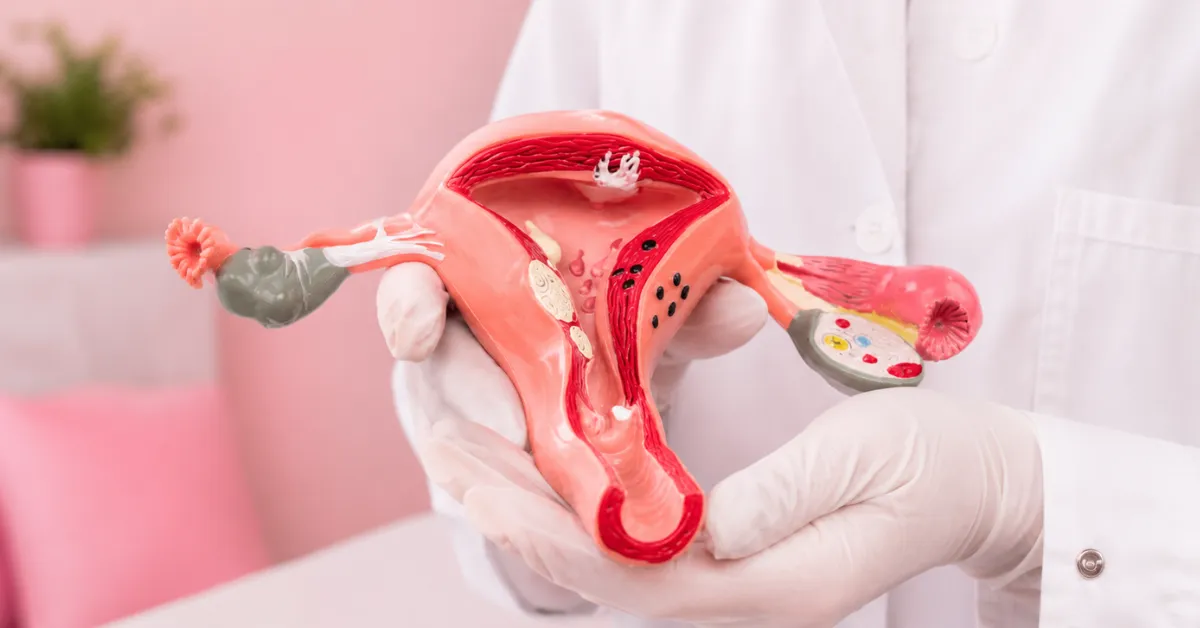

Uterine fibroids are non-cancerous growths made of muscle and tissue that form inside or on the wall of the uterus. They are one of the most common structural uterine conditions seen among women of reproductive age. Fibroids vary a great deal some are the size of a pea while others grow much larger. Most women carry fibroids without any symptoms at all. But when symptoms do appear, they can seriously affect quality of life.
Symptoms you may Notice
Fibroids are diagnosed through an ultrasound scan and, when needed, a sonohysterogram or MRI. Dr. N.S. Saradha first checks whether the fibroid is actually causing your symptoms and then discusses the most suitable approach which could be careful monitoring, medication to manage bleeding, or a minimally invasive procedure to remove the growth. The priority is always to preserve the uterus wherever possible, especially for women who want to have children.
Adenomyosis happens when the tissue that normally lines the inside of the uterus grows into the muscular wall of the uterus instead. This causes the uterine muscle to thicken and the uterus to become enlarged. It is one of the structural uterine conditions that often gets missed or confused with fibroids, so many women wait a long time before they receive a clear diagnosis.
How it Feels
The most common experience is severe, cramping pain during periods that seems to get worse over time. Periods tend to be heavy and prolonged. Some women also feel a constant dull ache in the pelvis throughout the month. The enlarged uterus can create a sense of bloating or a tender feeling when the lower abdomen is pressed.
What can be Done
Adenomyosis is best confirmed with an MRI or a skilled transvaginal ultrasound. Treatment is chosen based on how severe the symptoms are and whether the patient wants to conceive. Hormonal medications can reduce pain and bleeding significantly. For women who have completed their family and have severe symptoms, more definitive options are also discussed. Dr. Saradha walks through each option clearly, so you can decide what feels right for you.
Endometrial hyperplasia means the lining of the uterus the endometrium has grown thicker than it should. This happens when the body produces more oestrogen than progesterone over a period of time, causing the lining cells to multiply. While this is not cancer, certain types of endometrial hyperplasia do need close attention because they can, in some cases, progress.
Who is More Likely to Experience this
The main sign is irregular or unusually heavy bleeding, including bleeding between periods or after menopause. Diagnosis is made through an ultrasound followed by an endometrial biopsy to look at the cells under a microscope. Most cases are treated successfully with progesterone therapy. Regular follow-up ensures the lining returns to a normal thickness. Dr. Saradha monitors each patient's response carefully and adjusts the plan as needed.
A uterine septum is a band of tissue that divides the inside of the uterus into two parts, either partially or fully. It is a congenital condition, meaning it forms during the development of the uterus before birth and is present from birth. This is one of the structural uterine conditions that women often discover only when they start trying to conceive or experience recurrent pregnancy loss.
Other uterine shape differences such as a bicornuate uterus (heart-shaped), arcuate uterus, or a completely divided (didelphic) uterus are all part of a broader group called Müllerian anomalies. Each type has a different impact on fertility and pregnancy outcomes.
Why it Matters
A uterine septum reduces the space available for a growing baby and can limit blood supply to the area where the embryo implants. This raises the chance of miscarriage, early delivery, or the baby lying in an unusual position. Periods may be painful but are often normal, so many women have no idea the condition exists until they attempt pregnancy.
How it is Treated
A uterine septum can be identified through a 3D ultrasound, sonohysterography, or MRI. When treatment is needed, the septum is removed in a minor procedure called a hysteroscopic septoplasty, which is done using a thin telescope inserted through the vagina — no cuts on the outside of the body are required. Recovery is quick and the results on pregnancy outcomes are very encouraging.
Asherman's syndrome refers to the formation of scar tissue also called intrauterine adhesions inside the uterine cavity. When this scar tissue forms, it can partially or fully block the inside of the uterus. This is one of the structural uterine conditions that develops after the uterine lining has been disturbed, most often following a uterine procedure.
Common Causes
The most telling signs are periods that become very light or stop altogether after a uterine procedure, ongoing pelvic pain in a cyclical pattern, and difficulty getting pregnant. In some women the uterus continues to undergo the monthly cycle of changes but the blood has no way to exit, causing pain without visible bleeding.
Treatment and Recovery
Asherman's syndrome is diagnosed and treated using a hysteroscope. During the procedure, the adhesions are carefully divided and removed. After surgery, a short course of oestrogen therapy helps the lining regenerate. For mild to moderate cases, the uterine lining often recovers well and normal periods return. Dr. N.S. Saradha also provides careful follow-up hysteroscopy to check that adhesions have not reformed and that the uterus is healing as expected.
Structural uterine conditions are far more common than most women realise, and the good news is that all of them can be properly assessed and managed. Whether your concern is painful periods, heavy bleeding, recurrent miscarriage, or simply a finding on an ultrasound scan that was never fully explained to you, there is almost always a clear path forward.
Dr. N.S. Saradha brings focused expertise in structural uterine conditions treatment in Chennai. She combines modern diagnostic tools with a personalised approach, taking the time to explain what she finds and what it means for your health. Her clinics in Vadapalani and Saligramam are easily accessible from across Chennai and the surrounding areas.
If you have been searching for a reliable gynaecologist in Vadapalani or a gynaecologist in Saligramam who has specific experience with uterine conditions, Dr. Saradha's practice is a trusted choice. Every consultation starts with a thorough assessment, an open conversation about your history and goals, and a treatment plan designed around what matters to you.
Fibroids are benign smooth-muscle tumours of the uterus. Most are asymptomatic, but depending on size and location they can cause heavy bleeding, pelvic pressure, pain, or subfertility. Malignant transformation (leiomyosarcoma) is extremely rare (under 0.1%).
Adenomyosis is when endometrial glands and stroma are found within the uterine muscle wall, causing an enlarged, often tender uterus. Endometriosis is when similar tissue grows outside the uterus entirely. The two conditions frequently co-exist.
Polyps are soft, finger-like growths from the endometrial lining, most common after age 40. They often cause intermenstrual or postmenopausal bleeding. Most are benign but a small proportion (especially in postmenopausal women) can carry pre-cancerous or cancerous change.
A retroverted uterus is a normal anatomical variant present in about 20% of women and usually causes no symptoms. Rarely, a fixed retroverted uterus (due to endometriosis or adhesions) may cause deep dyspareunia or pelvic pain.
Asherman’s syndrome is the formation of intrauterine adhesions (scar tissue), usually following uterine surgery (e.g. D&C after miscarriage). It can cause light or absent periods, pelvic pain, and subfertility. Treatment is hysteroscopic adhesiolysis.
Take the first step toward better women’s health with expert, compassionate care at Dr. N.S. Saradha Women’s Health Centre. Get accurate diagnosis, advanced treatments, and personalized care designed to support safe recovery and long-term wellness at every stage of life.